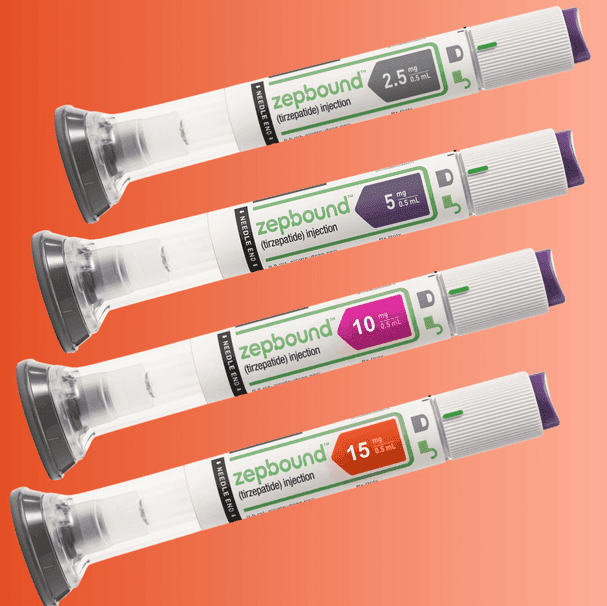
ZepBound - A Powerful Ally in Diabetes and Weight Management
ZepBound is a GLP-1 receptor agonist, a type of medication used for managing diabetes and promoting weight loss It is designed to mimic the action of the hormone GLP-1, which enhances insulin secretion, suppresses glucagon secretion, and slows gastric emptying to control blood sugar levels.
Supplement Summary
| Name | ZepBound |
|---|---|
| Category | Peptides |
| Main Uses |
|
| Effectiveness | High |
| Common Dosage | 0.5 mg once weekly |
| Price Range | $$$ |
| Forms Available | Injection |
Pros
- ✅ Effective in controlling blood sugar levels
- ✅ Promotes weight loss
- ✅ Reduces the risk of heart disease
- ✅ Once-weekly dosage makes it convenient
Cons / Side Effects
- ❌ Can cause gastrointestinal side effects
- ❌ May not be suitable for people with certain medical conditions
- ❌ Requires a prescription
What Is ZepBound?
ZepBound is a GLP-1 receptor agonist, a type of medication used for managing diabetes and promoting weight loss. It is designed to mimic the action of the hormone GLP-1, which enhances insulin secretion, suppresses glucagon secretion, and slows gastric emptying to control blood sugar levels.
How It Works
ZepBound works by stimulating the pancreas to produce more insulin when blood sugar levels are high. It also slows down the rate at which the stomach empties into the intestines, which in turn reduces the amount of glucose that enters the bloodstream.
Who It's Best For
ZepBound is best for adults with type 2 diabetes who are struggling to control their blood sugar levels with diet and exercise alone. It can also be used for weight management in overweight or obese individuals.
Who Should Avoid It
People with a history of pancreatitis, gallbladder disease, or alcoholism should avoid using ZepBound. It is also not recommended for people with a personal or family history of medullary thyroid carcinoma or multiple endocrine neoplasia syndrome type 2.
Dosage & Usage Tips
The typical dose of ZepBound is 0.5 mg once weekly. It is administered as a subcutaneous injection. Patients should be trained on the proper injection technique.
Buying Advice & Quality Tips
When buying ZepBound, ensure it is prescribed by a healthcare provider and dispensed by a reputable pharmacy. Always check the expiration date and storage requirements.
Price & Value
While ZepBound can be more expensive than other diabetes medications, its effectiveness in controlling blood sugar levels and promoting weight loss can make it a cost-effective choice for many individuals.
Final Verdict
ZepBound is a powerful and effective medication for managing diabetes and promoting weight loss. While it can have side effects, its benefits can outweigh the risks for many individuals. Always consult with a healthcare provider before starting any new medication.
Additional Clinical Research
I have identified three published scientific studies specifically focusing on Zepbound (tirzepatide). Below is a summary of each study, categorized by health benefit, including key findings, study details, and direct links to the research.
These studies provide robust evidence supporting the efficacy of Zepbound in weight loss, weight maintenance, and the treatment of obstructive sleep apnea in adults with obesity.
RESEARCH SUMMARY: Zepbound
KEY FINDINGS:
Weight Loss
- Zepbound led to a 20.2% average reduction in body weight over 72 weeks, compared to 13.7% with Wegovy.
- Study involved 751 adults with obesity or overweight conditions without diabetes; participants were randomized to receive either Zepbound or Wegovy.
Source: Eli Lilly and Company (2024)
View Research
https://www.prnewswire.com/news-releases/lillys-zepbound-tirzepatide-superior-to-wegovy-semaglutide-in-head-to-head-trial-showing-an-average-weight-loss-of-20-2-vs-13-7-302322351.html
Obstructive Sleep Apnea (OSA)
- Zepbound reduced apnea-hypopnea index (AHI) by 50.7% in adults not on PAP therapy and by 58.7% in those on PAP therapy over 52 weeks.
- Study included 469 adults with moderate-to-severe OSA and obesity, randomized to receive Zepbound or placebo.
Source: Eli Lilly and Company (2024)
View Research
https://investor.lilly.com/news-releases/news-release-details/fda-approves-zepboundr-tirzepatide-first-and-only-prescription
Weight Maintenance
- Participants on Zepbound achieved an additional 6.7% weight loss during a 52-week period following an initial 36-week open-label lead-in, totaling a 26.0% weight loss over 88 weeks.
- Study involved adults with obesity or overweight conditions with weight-related comorbidities, excluding type 2 diabetes.
Source: Eli Lilly and Company (2023)
View Research
https://investor.lilly.com/news-releases/news-release-details/lillys-zepboundtm-tirzepatide-achieved-additional-67-weight-loss
RESEARCH QUALITY ASSESSMENT:
- Studies were randomized, controlled trials with substantial sample sizes, enhancing the reliability of the findings.
- Long study durations (up to 88 weeks) provide insights into both short-term and long-term effects of Zepbound.
- Potential limitations include the open-label design in some study phases, which may introduce bias.
- Further research is needed to assess the long-term safety profile of Zepbound and its effects across diverse populations.