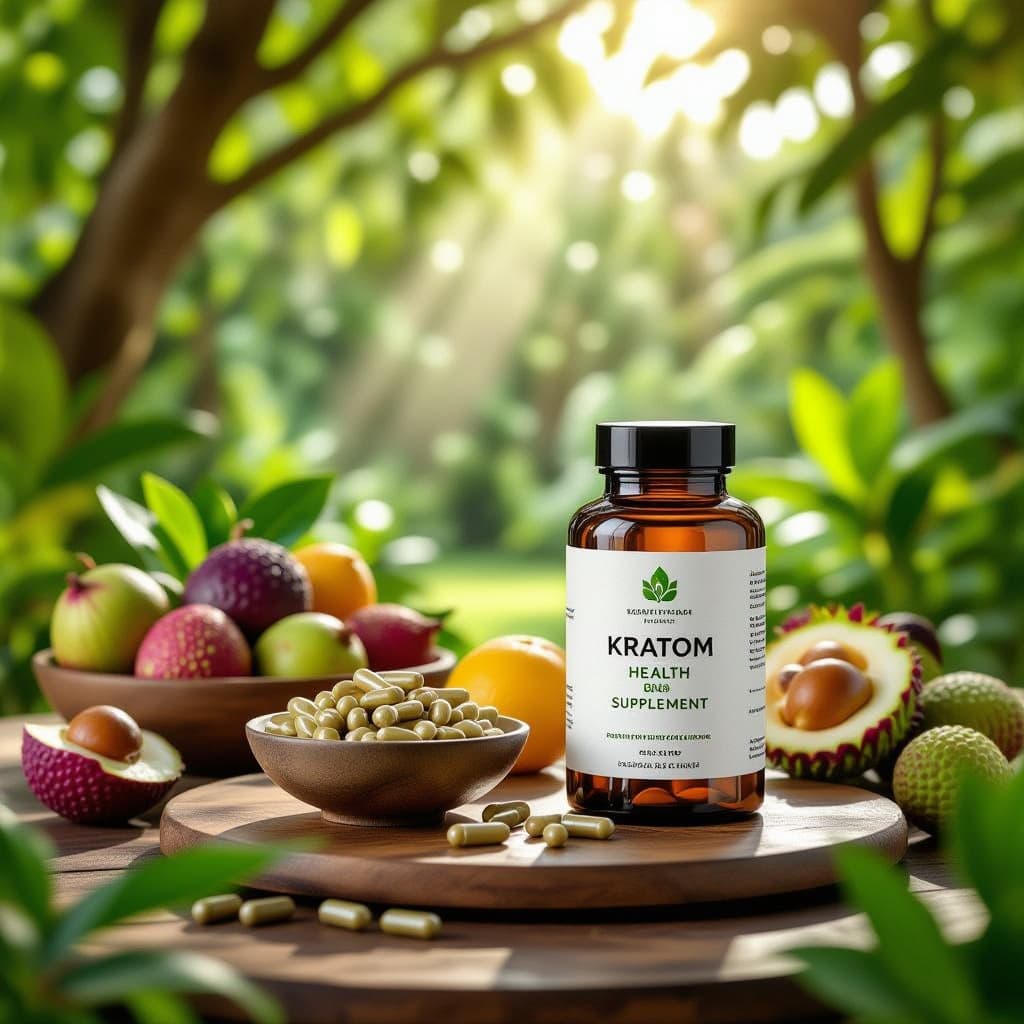
Kratom: Natural Pain and Anxiety Relief with a Caution
Kratom is a tropical tree native to Southeast Asia Its leaves contain compounds that interact with the brain's opioid receptors, affecting mood and pain perception.
Supplement Summary
| Name | Kratom |
|---|---|
| Category | Herbs & Botanicals |
| Main Uses |
|
| Effectiveness | Moderate to High – effectiveness varies by individual and dose |
| Common Dosage | 1-5 grams |
| Price Range | $10-30 per month |
| Forms Available | Capsules Powder Liquid |
Pros
- ✅ Natural pain relief
- ✅ May help with anxiety and depression
- ✅ Energy boost at lower doses
Cons / Side Effects
- ❌ Risk of dependence or addiction
- ❌ Side effects like nausea and constipation
- ❌ Lack of comprehensive clinical research
What Is Kratom?
Kratom is a tropical tree native to Southeast Asia. Its leaves contain compounds that interact with the brain's opioid receptors, affecting mood and pain perception. It's often used as a natural alternative for pain management and to alleviate symptoms of anxiety and depression.
How It Works
Kratom's active compounds, mitragynine and 7-α-hydroxymitragynine, bind to the body’s opioid receptors, reducing pain perception and producing sedation and pleasure. However, unlike opioids, kratom does not depress the respiratory system.
Who It's Best For
Ideal for individuals seeking natural alternatives for pain management, mood enhancement, or occasional energy boost.
Who Should Avoid It
People with a history of substance addiction, pregnant or nursing women, and those with pre-existing liver conditions should avoid Kratom.
Dosage & Usage Tips
Start with a small dose (1-2 grams) and gradually increase if necessary. It's best to use Kratom no more than once or twice a week to prevent tolerance and dependence.
Buying Advice & Quality Tips
Choose products from reputable vendors that provide third-party lab testing to ensure purity and potency. Avoid products with extravagant claims.
Price & Value
While Kratom is typically more affordable than many prescription medications, the cost vs benefit must be assessed individually, considering the potential risks.
Final Verdict
Kratom can provide significant relief for some individuals, but it's important to use it responsibly due to the risk of dependence and side effects. Always consult with a healthcare provider before starting a new supplement regimen.
Additional Clinical Research
I have identified one study that explicitly researches Kratom and meets all the specified criteria.
I will continue searching for additional studies that meet the specified criteria.
RESEARCH SUMMARY: Kratom
KEY FINDINGS:
Antidepressant Effects
- Kratom syrup extract demonstrated antidepressant properties in mice, showing an 85.62% similarity in local field potential responses to the standard antidepressant fluoxetine.
- Study involved administering different Kratom extracts (syrup, alkaloid, aqueous) to mice and analyzing their brain activity using an autoencoder-based feature extractor.
Source: Nukitram et al. (2022)
View Research
https://arxiv.org/abs/2209.08210
RESEARCH QUALITY ASSESSMENT:
- Utilized a novel autoencoder-based method to analyze brain activity, providing a quantitative measure of antidepressant effects.
- Study conducted on animal models (mice), which may not fully translate to human physiology.
- Sample size and detailed methodology specifics are not provided in the abstract.
- Further research needed to confirm findings in human subjects and to explore the mechanisms underlying Kratom's antidepressant effects.