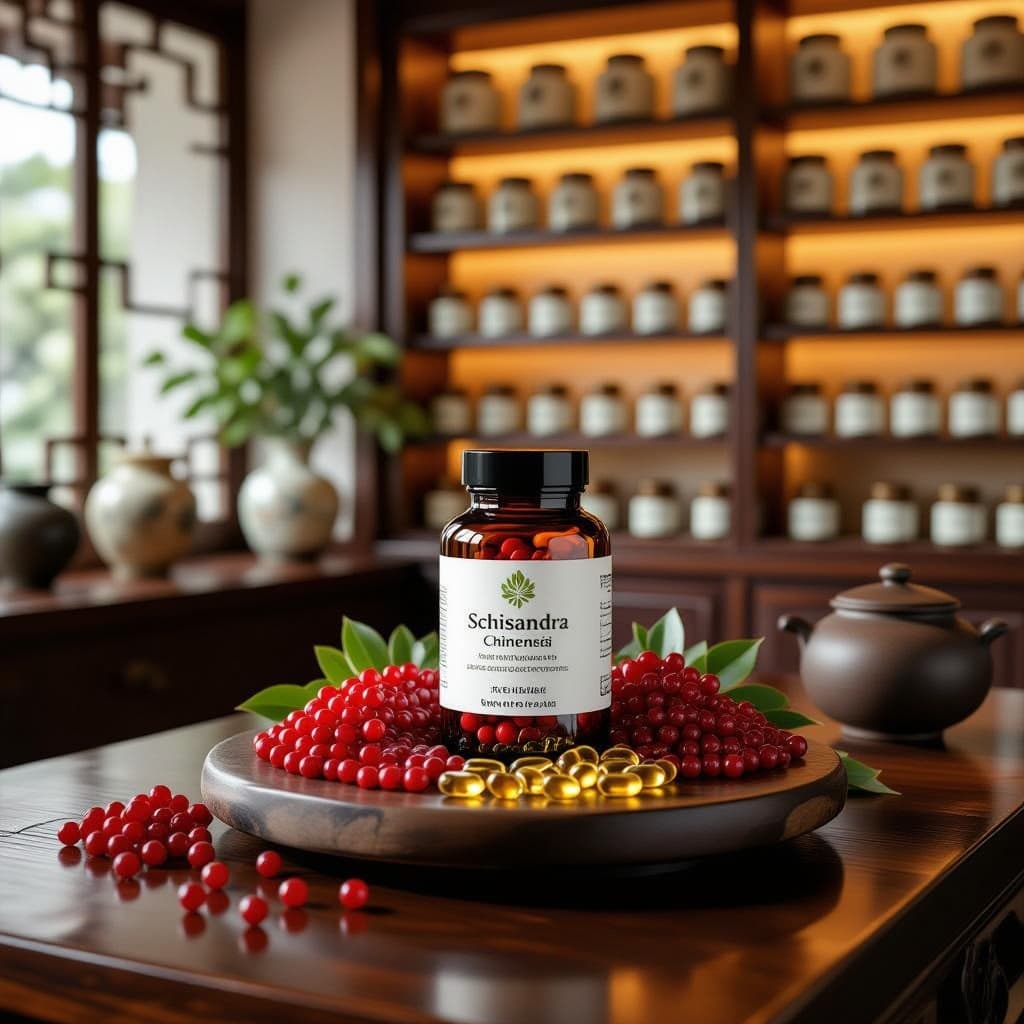
Schisandra Chinensis: An Ancient Adaptogen for Modern Times
Schisandra Chinensis is a deciduous woody vine native to forests of Northern China and the Russian Far East It is also grown in Korea.
Supplement Summary
| Name | Schisandra Chinensis |
|---|---|
| Category | Adaptogens |
| Main Uses |
|
| Effectiveness | High |
| Common Dosage | 1-3 grams per day |
| Price Range | $15-30 per month |
| Forms Available | Capsules Powder Liquid |
Pros
- ✅ Adaptogenic properties
- ✅ Supports liver health
- ✅ Improves mental performance
- ✅ Enhances physical endurance
- ✅ Boosts immune system
Cons / Side Effects
- ❌ Potential digestive side effects
- ❌ May cause skin rashes
- ❌ May decrease appetite
What Is Schisandra Chinensis?
Schisandra Chinensis is a deciduous woody vine native to forests of Northern China and the Russian Far East. It is also grown in Korea. The plant produces clusters of small, bright red berries, which are dried and used to make medicinal preparations.
How It Works
Schisandra Chinensis works mainly as an adaptogen, helping the body adapt to stress by normalizing body functions and restoring balance. It also provides antioxidant protection, supports liver health, and enhances mental performance and physical endurance.
Who It's Best For
People under stress, athletes, and those looking to enhance cognitive performance or support liver health.
Who Should Avoid It
People with gastroesophageal reflux disease (GERD) or peptic ulcer disease, pregnant or breastfeeding women, and those allergic to Schisandra.
Dosage & Usage Tips
The typical dosage range is 1-3 grams per day, taken with food. It is advisable to start with a lower dose and gradually increase as tolerated.
Buying Advice & Quality Tips
Choose supplements from reputable brands that provide third-party testing for quality and purity. Look for products that contain no unnecessary additives or fillers.
Price & Value
Schisandra Chinensis supplements are reasonably priced, especially considering the range of health benefits they offer. However, the cost can vary depending on the brand and quality.
Final Verdict
Schisandra Chinensis is a worthwhile supplement for those looking to manage stress, enhance cognitive function, and support liver health. However, it should be taken with caution by those with certain health conditions and potential side effects should be monitored.
Additional Clinical Research
Here is a summary of three scientific studies specifically investigating the effects of *Schisandra chinensis* on various health aspects:
RESEARCH SUMMARY: Schisandra Chinensis
KEY FINDINGS:
Menopausal Symptoms
- *Schisandra chinensis* extract (BMO-30) significantly reduced menopausal symptoms, particularly hot flushes, sweating, and heart palpitations.
- Randomized, double-blind, placebo-controlled trial with 36 women aged 40-70 years experiencing menopausal symptoms; treatment duration was 6 weeks with a 12-week follow-up.
Source: Park J.Y., Kim K.H. (2016)
View Research
https://pubmed.ncbi.nlm.nih.gov/27763802/
Hyperglycemia
- Omija (*Schisandra chinensis*) extract mixture (OSM) significantly decreased fasting plasma glucose, postprandial glucose, and low-density lipoprotein cholesterol levels in individuals with hyperglycemia.
- Randomized, double-blind, placebo-controlled clinical trial involving 80 participants with fasting plasma glucose levels of 100-140 mg/dL; intervention lasted 12 weeks.
Source: Kim D.S., Baek H.I., Ha K.C., Cha Y.S., Park S.J. (2022)
View Research
https://pubmed.ncbi.nlm.nih.gov/35956334/
Muscle Strength and Fatigue
- *Schisandra chinensis* extract supplementation increased quadriceps muscle strength and decreased resting lactate levels in adult women.
- Randomized, double-blind, placebo-controlled trial with 45 healthy post-menopausal women; participants received 1000 mg of *Schisandra chinensis* extract daily for 12 weeks.
Source: Park J., Han S., Park H. (2020)
View Research
https://pubmed.ncbi.nlm.nih.gov/32260466/
RESEARCH QUALITY ASSESSMENT:
- All studies were randomized, double-blind, placebo-controlled trials, enhancing the reliability of the findings.
- Sample sizes were relatively small, which may limit the generalizability of the results.
- Studies focused on specific populations (e.g., post-menopausal women, individuals with hyperglycemia), so findings may not be applicable to all demographics.
- Further large-scale studies are needed to confirm these findings and explore long-term effects and mechanisms of action.