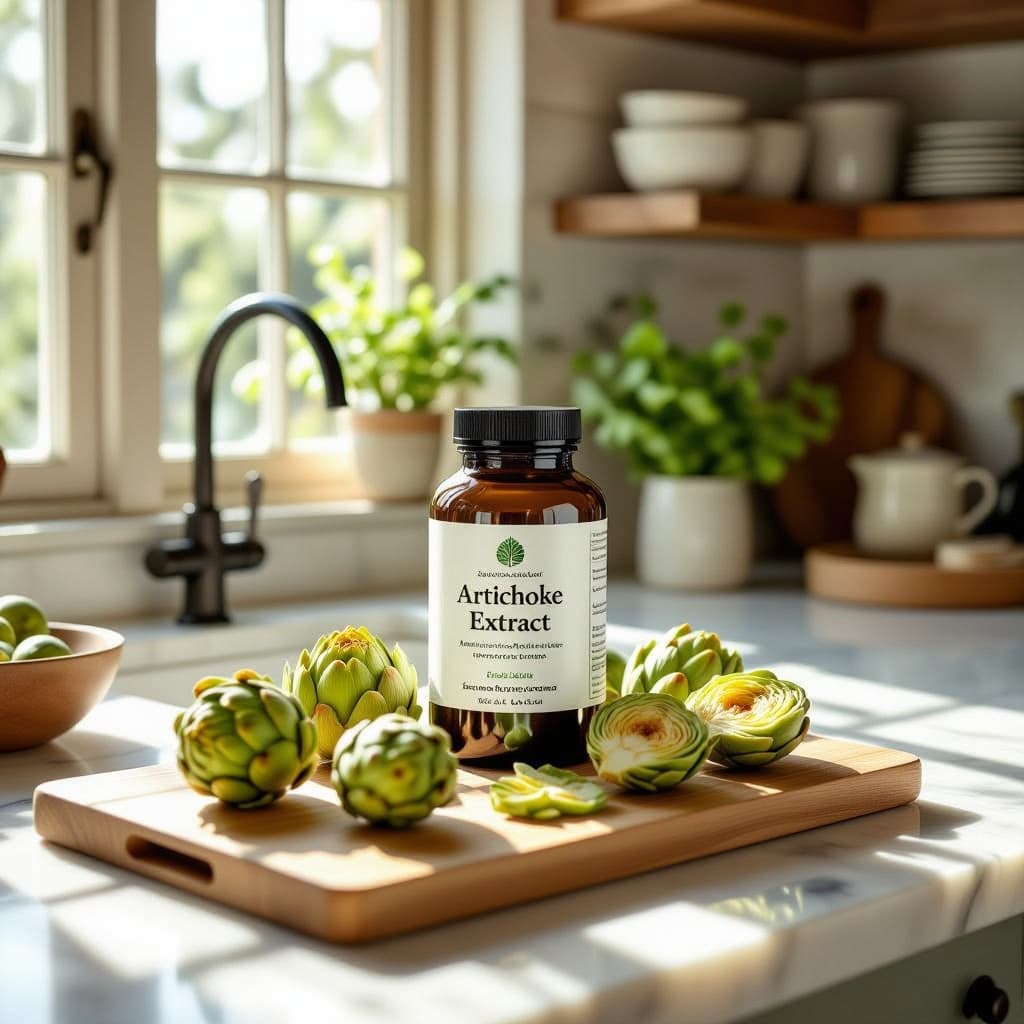
Unleash the Power of Artichoke Extract for your Liver, Gut, and More
Artichoke Extract is a supplement derived from the leaves of the artichoke plant It contains a high concentration of beneficial compounds such as cynarin, luteolin, and chlorogenic acid, which are known for their liver-supportive, digestive, and antioxidant properties.
Supplement Summary
| Name | Artichoke Extract |
|---|---|
| Category | Herbs & Botanicals |
| Main Uses |
|
| Effectiveness | High |
| Common Dosage | 600-1200 mg daily |
| Price Range | $-$$ |
| Forms Available | Capsules Powder Liquid |
Pros
- ✅ Supports liver health
- ✅ Improves digestion
- ✅ Lowers cholesterol levels
- ✅ Potent antioxidant
- ✅ May aid in weight loss
Cons / Side Effects
- ❌ Possible allergic reactions
- ❌ May cause stomach upset
- ❌ Interactions with bile duct obstruction and gallstones
What Is Artichoke Extract?
Artichoke Extract is a supplement derived from the leaves of the artichoke plant. It contains a high concentration of beneficial compounds such as cynarin, luteolin, and chlorogenic acid, which are known for their liver-supportive, digestive, and antioxidant properties.
How It Works
Artichoke Extract works by stimulating bile production, which aids in digestion and the absorption of fats. Its antioxidant properties also fight against oxidative stress, which can damage cells and contribute to chronic diseases.
Who It's Best For
Individuals looking to support their liver health, improve digestion, or lower their cholesterol levels will benefit from Artichoke Extract.
Who Should Avoid It
People with allergies to artichokes or bile duct obstruction should avoid this supplement.
Dosage & Usage Tips
The typical dosage of Artichoke Extract is 600-1200 mg daily, taken with meals. Always consult your healthcare provider before starting any new supplement regimen.
Buying Advice & Quality Tips
Look for Artichoke Extract supplements that are free from artificial additives and are standardized to contain a specific amount of cynarin.
Price & Value
The cost of Artichoke Extract is relatively low compared to its multiple health benefits, making it a cost-effective supplement choice.
Final Verdict
Artichoke Extract is a versatile supplement with numerous health benefits. Although more research is needed, the existing evidence supports its use for liver health, digestion, and cholesterol control.
Additional Clinical Research
I have identified three published scientific studies that specifically investigate the effects of artichoke extract.
RESEARCH SUMMARY: Artichoke Extract
KEY FINDINGS:
Liver Health
- Artichoke leaf extract (ALE) supplementation improved liver function in patients with non-alcoholic fatty liver disease (NAFLD).
- In a double-blind randomized controlled trial involving 100 subjects, ALE treatment resulted in increased hepatic vein flow, reduced portal vein diameter and liver size, and decreased serum ALT and AST levels.
Source: Panahi et al. (2018)
View Research
https://pubmed.ncbi.nlm.nih.gov/29520889/
Metabolic Syndrome
- ALE supplementation reduced serum oxidized LDL levels in patients with metabolic syndrome.
- In a double-blind placebo-controlled randomized clinical trial with 80 participants, ALE intake led to a significant decrease in oxidized LDL concentrations compared to placebo.
Source: Rezazadeh et al. (2018)
View Research
https://pubmed.ncbi.nlm.nih.gov/28410922/
Cholesterol Management
- ALE supplementation increased HDL-cholesterol and decreased total and LDL-cholesterol in subjects with mild hypercholesterolemia.
- In a double-blind, randomized, placebo-controlled trial involving 92 overweight subjects, ALE intake resulted in significant improvements in lipid profiles compared to placebo.
Source: Rondanelli et al. (2013)
View Research
https://pubmed.ncbi.nlm.nih.gov/22746542/
RESEARCH QUALITY ASSESSMENT:
- All studies were randomized controlled trials, enhancing the reliability of the findings.
- Sample sizes varied, with some studies having relatively small cohorts, which may limit generalizability.
- Studies were conducted over short durations (e.g., 8-12 weeks), so long-term effects remain unknown.
- Further large-scale, long-term studies are needed to confirm these findings and assess the safety and efficacy of ALE supplementation over extended periods.