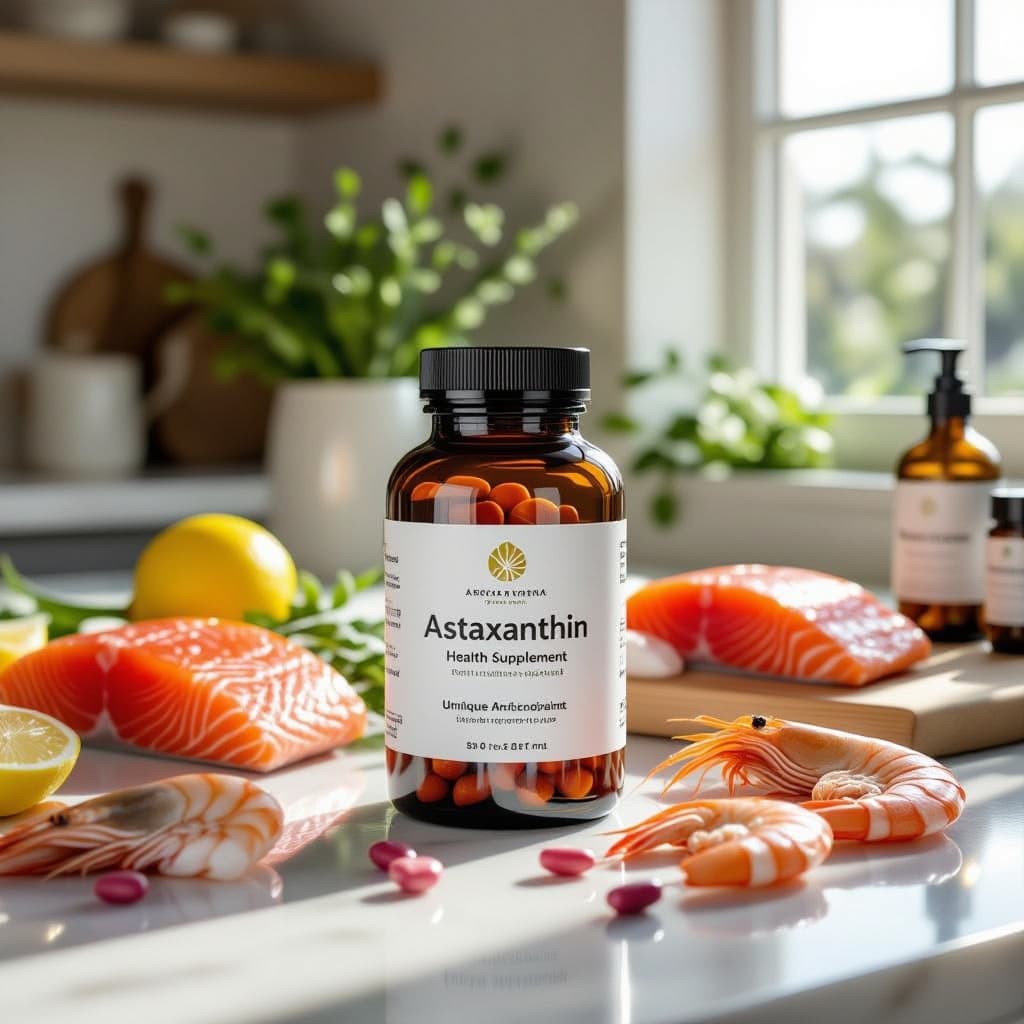
Astaxanthin: The Antioxidant Powerhouse for a Healthier You
Astaxanthin is a carotenoid, a naturally occurring compound found in certain algae and seafood It's a powerful antioxidant that has been associated with numerous health benefits—from boosting skin health to improving joint and tendon health.
Supplement Summary
| Name | Astaxanthin |
|---|---|
| Category | Antioxidants |
| Main Uses |
|
| Effectiveness | High |
| Common Dosage | 4-12mg per day |
| Price Range | $15-30 per month |
| Forms Available | Capsules Soft gels Liquid |
Pros
- ✅ Highly potent antioxidant
- ✅ Supports eye health
- ✅ Promotes joint and tendon health
- ✅ May improve skin health
- ✅ Can enhance exercise performance
Cons / Side Effects
- ❌ Possible hormonal changes
- ❌ Can cause increased skin pigmentation
- ❌ May result in unwanted hair growth
What Is Astaxanthin?
Astaxanthin is a carotenoid, a naturally occurring compound found in certain algae and seafood. It's a powerful antioxidant that has been associated with numerous health benefits—from boosting skin health to improving joint and tendon health.
How It Works
Astaxanthin works primarily through its potent antioxidant effects. It neutralizes free radicals, reducing oxidative stress, which is linked with inflammation, aging, and various diseases.
Who It's Best For
Astaxanthin is ideal for those seeking to boost their antioxidant intake, improve eye health, support joint and tendon health, and enhance exercise performance.
Who Should Avoid It
People with known allergies to carotenoids, those with hormonal disorders, or those with skin conditions may want to avoid Astaxanthin.
Dosage & Usage Tips
Astaxanthin is typically taken in doses of 4-12mg per day, and it's best taken with a meal to enhance absorption.
Buying Advice & Quality Tips
When buying Astaxanthin, look for natural forms derived from algae. Make sure the product is from a reputable company and has been third-party tested for purity and quality.
Price & Value
Astaxanthin is moderately priced, but given its wide range of benefits, it offers good value for money.
Final Verdict
Overall, Astaxanthin is a powerful antioxidant supplement with promising health benefits. However, as with any supplement, it's important to consult a healthcare professional before starting.
Additional Clinical Research
RESEARCH SUMMARY: Astaxanthin
KEY FINDINGS:
Management of Oral Submucous Fibrosis
- Astaxanthin supplementation significantly improved mouth opening and reduced burning sensation in individuals with oral submucous fibrosis (OSMF).
- Randomized, double-blind, placebo-controlled trial with 68 participants over 12 weeks; the experimental group received 5 mg of astaxanthin twice daily.
Source: Perumal et al. (2024)
View Research
https://pmc.ncbi.nlm.nih.gov/articles/PMC10960228/
Antioxidant Effects in Polycystic Ovary Syndrome (PCOS)
- Astaxanthin supplementation increased serum catalase (CAT) and total antioxidant capacity (TAC) levels, and improved oocyte maturation and high-quality embryo rates in women with PCOS undergoing assisted reproductive technology (ART).
- Double-blind, randomized, placebo-controlled trial with 40 participants over 40 days; the intervention group received 8 mg of astaxanthin daily.
Source: Jamilian et al. (2022)
View Research
https://pubmed.ncbi.nlm.nih.gov/35237893/
Oxidative Stress and Inflammation in Type 2 Diabetes Mellitus
- Astaxanthin supplementation reduced plasma malondialdehyde (MDA) and interleukin-6 (IL-6) levels, and downregulated miR-146a expression in patients with type 2 diabetes mellitus (T2DM).
- Randomized, double-blind, placebo-controlled clinical trial with 44 participants over 8 weeks; the intervention group received 8 mg of astaxanthin daily.
Source: Shokri-Mashhadi et al. (2021)
View Research
https://onlinelibrary.wiley.com/doi/10.1111/ijcp.14022
RESEARCH QUALITY ASSESSMENT:
- All studies were randomized, double-blind, placebo-controlled trials, enhancing the reliability of the findings.
- Sample sizes were relatively small, which may limit the generalizability of the results.
- Short intervention durations (8 to 12 weeks) may not capture long-term effects of astaxanthin supplementation.
- Further large-scale, long-term studies are needed to confirm these findings and establish optimal dosing regimens.