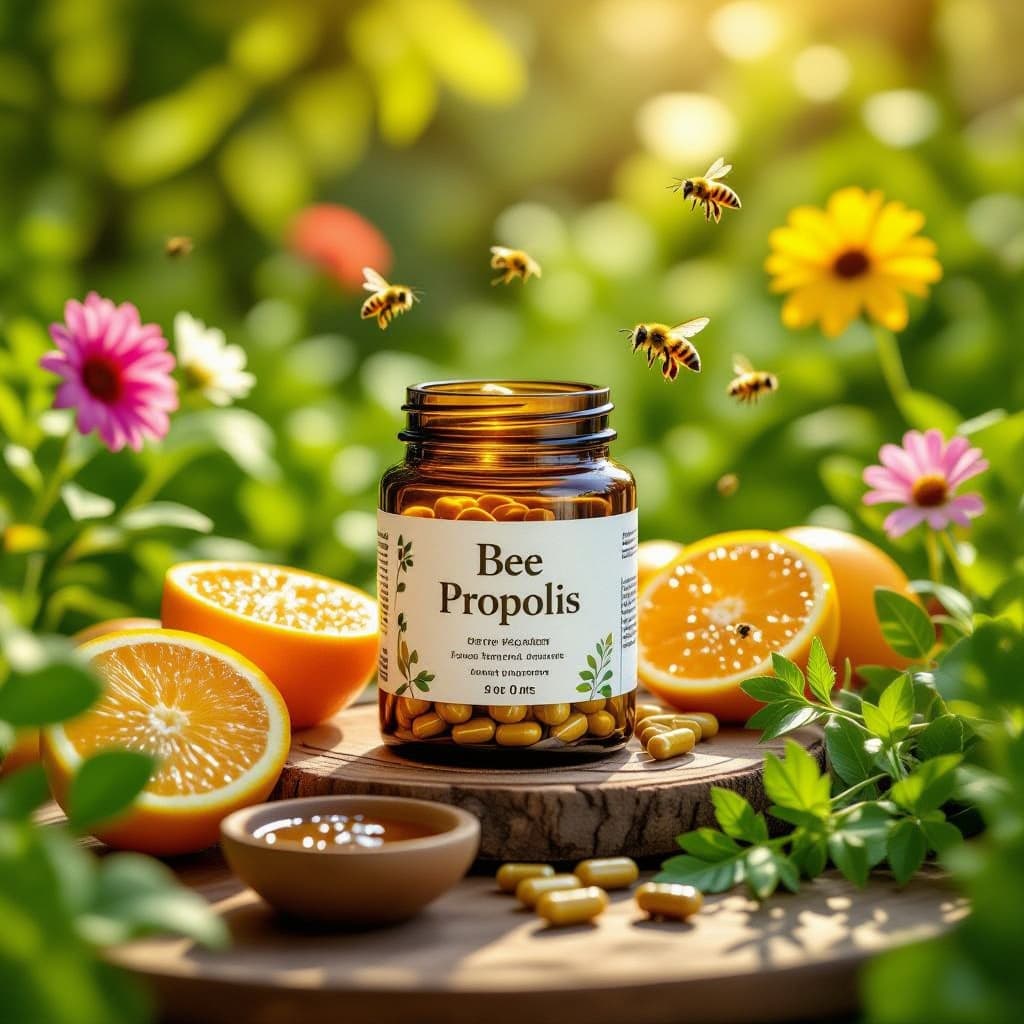
Bee Propolis: Nature's Powerful Antioxidant and Immune Booster
Bee Propolis is a natural substance collected by honey bees from buds and trees Containing over 300 compounds such as polyphenols, flavonoids, and organic acids, Bee Propolis is a potent antioxidant and has significant anti-inflammatory, antimicrobial, and immune-boosting properties.
Supplement Summary
| Name | Bee Propolis |
|---|---|
| Category | Antioxidants |
| Main Uses |
|
| Effectiveness | High, due to the wealth of scientific evidence supporting its benefits |
| Common Dosage | 500-1500 mg per day |
| Price Range | $10-20 per month |
| Forms Available | Capsules Liquid Spray Lozenges |
Pros
- ✅ Rich source of antioxidants
- ✅ Boosts immune function
- ✅ Anti-inflammatory and antimicrobial properties
- ✅ Supports oral health
- ✅ Low risk of side effects
Cons / Side Effects
- ❌ Potential allergic reactions
- ❌ Possible interactions with blood thinners
- ❌ Variability in composition depending on geographic location and bee species
What Is Bee Propolis?
Bee Propolis is a natural substance collected by honey bees from buds and trees. Containing over 300 compounds such as polyphenols, flavonoids, and organic acids, Bee Propolis is a potent antioxidant and has significant anti-inflammatory, antimicrobial, and immune-boosting properties.
How It Works
Bee Propolis works by inhibiting harmful microorganisms and enhancing the body's natural defense mechanisms. Its rich antioxidant content protects cells from damage by neutralizing harmful free radicals.
Who It's Best For
Bee Propolis is ideal for individuals looking to boost their immune function, reduce inflammation, support oral health, and protect against oxidative stress.
Who Should Avoid It
People who are allergic to honey or bee products should avoid Bee Propolis. Also, those taking blood thinners or other medications should consult a healthcare provider before use.
Dosage & Usage Tips
The typical dosage for Bee Propolis is 500-1500 mg per day, taken in divided doses. It's best to start with a lower dose and gradually increase as tolerated.
Buying Advice & Quality Tips
When buying Bee Propolis, look for products that specify the Propolis content. Choose products from reputable manufacturers that follow good manufacturing practices.
Price & Value
Bee Propolis offers excellent value for its cost, considering its wide range of health benefits and low risk of side effects. However, prices can vary depending on the product's quality and Propolis content.
Final Verdict
Considering its numerous health benefits and low risk of side effects, Bee Propolis is definitely a worthwhile supplement for most individuals. It's a natural way to enhance immune function, combat inflammation, and protect against oxidative stress.
Additional Clinical Research
Here is a summary of scientific studies specifically investigating the effects of bee propolis:
RESEARCH SUMMARY: Bee Propolis
KEY FINDINGS:
Pain Relief
- Bee propolis significantly reduced primary dysmenorrhea pain compared to placebo over two menstrual cycles.
- Study involved 86 female students aged 19–23, randomized into bee propolis and placebo groups.
Source: Jenabi et al. (2019)
View Research
https://pmc.ncbi.nlm.nih.gov/articles/PMC6737054/
Glycemic Control
- Daily intake of 900 mg bee propolis for 12 weeks improved fasting blood glucose and HbA1c levels in type 2 diabetes patients.
- Randomized clinical trial with 66 participants divided into intervention and placebo groups.
Source: Samadi et al. (2017)
View Research
https://pubmed.ncbi.nlm.nih.gov/28285617/
Respiratory Health
- Propolis supplementation improved clinical and physiological outcomes in moderate persistent asthma patients.
- Study included 52 subjects aged 44.6±18.5 years, randomized to receive propolis or placebo for one month.
Source: Mirsadraee et al. (2021)
View Research
https://pmc.ncbi.nlm.nih.gov/articles/PMC7885004/
RESEARCH QUALITY ASSESSMENT:
- Studies employed randomized controlled trial designs, enhancing reliability.
- Sample sizes were relatively small, which may limit generalizability.
- Short intervention durations; long-term effects remain unknown.
- Further large-scale, long-term studies are needed to confirm findings and assess safety.