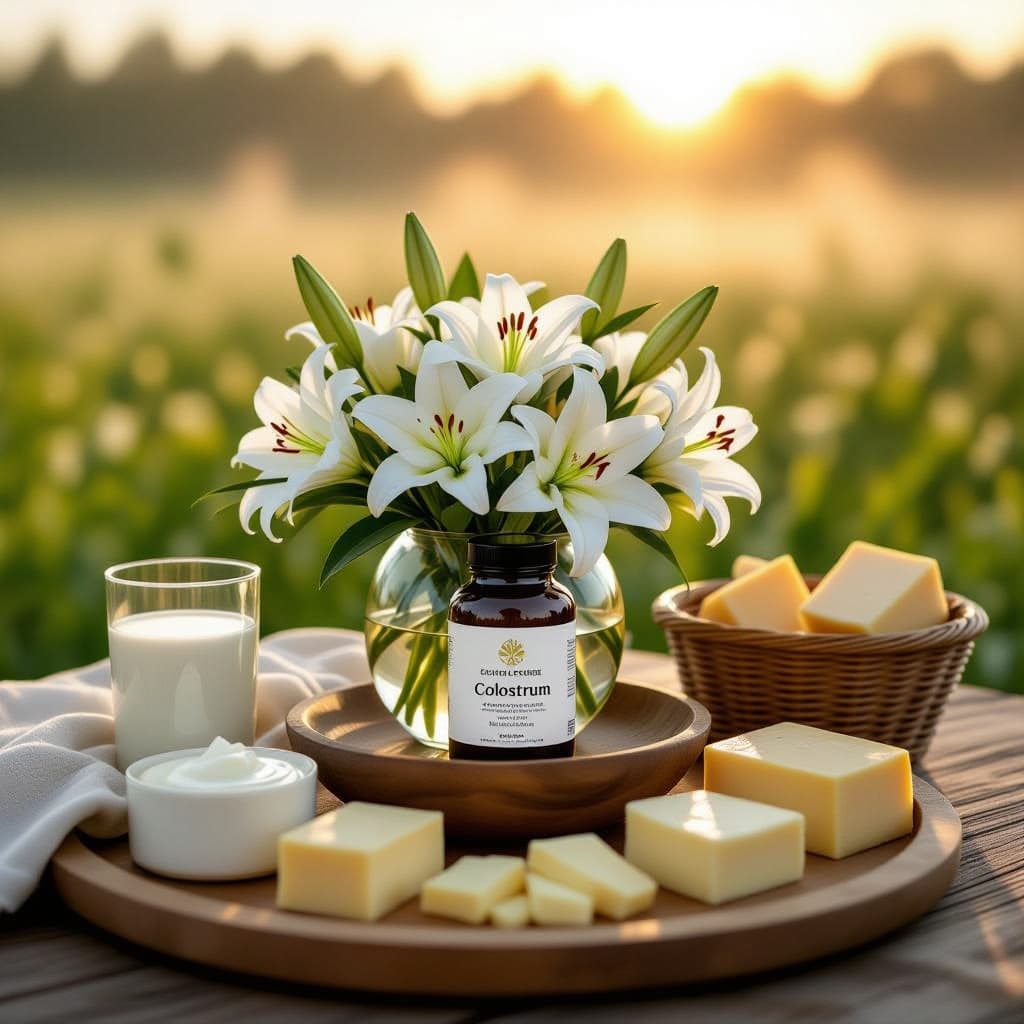
Colostrum: A Natural Powerhouse for Immune Support, Gut Health, and Athletic Performance
Colostrum, often described as 'nature's first food,' is the pre-milk fluid produced by mammals after giving birth It's packed with immune-supporting immunoglobulins, growth factors for tissue repair and development, and various other bioactive compounds.
Supplement Summary
| Name | Colostrum |
|---|---|
| Category | Immune Support |
| Main Uses |
|
| Effectiveness | High |
| Common Dosage | 1-2 grams daily |
| Price Range | $15-30 per month |
| Forms Available | Capsules Powder Liquid |
Pros
- ✅ Boosts immune function
- ✅ Promotes gut health
- ✅ Enhances recovery and muscle growth
- ✅ Natural and safe
- ✅ Potentially slows down aging
Cons / Side Effects
- ❌ Potential gastrointestinal discomfort
- ❌ Allergic reactions in sensitive individuals
- ❌ Not suitable for those with dairy allergies
What Is Colostrum?
Colostrum, often described as 'nature's first food,' is the pre-milk fluid produced by mammals after giving birth. It's packed with immune-supporting immunoglobulins, growth factors for tissue repair and development, and various other bioactive compounds.
How It Works
Colostrum works by supplying the body with essential nutrients and bioactive factors. Its immunoglobulins boost immune function, growth factors promote tissue repair and development, and other compounds help regulate immune and inflammatory responses.
Who It's Best For
Ideal for individuals looking to boost their immune function, improve gut health, enhance athletic performance, or support general well-being. It's also beneficial for people seeking natural anti-aging solutions.
Who Should Avoid It
People with a known allergy to dairy products should avoid colostrum. Those with immune system disorders should consult a healthcare professional before supplementation.
Dosage & Usage Tips
Typically, 1-2 grams of colostrum is taken daily on an empty stomach. It's available in various forms, including capsules, powders, and liquids.
Buying Advice & Quality Tips
When buying colostrum, look for products from reputable manufacturers that provide third-party testing. It's also advisable to choose colostrum sourced from grass-fed cows to ensure the highest quality.
Price & Value
Compared to other supplements, colostrum offers excellent value for its wide range of health benefits. It's a cost-effective choice for immune support, gut health, and athletic performance.
Final Verdict
Colostrum is an excellent supplement with multiple health benefits. Its immune-boosting, gut-enhancing, and performance-enhancing properties make it a versatile and valuable addition to any supplement regimen.
Additional Clinical Research
Colostrum, the first form of milk produced by mammals immediately following delivery, is rich in antibodies, growth factors, and nutrients. Recent scientific studies have explored its potential health benefits. Below is a summary of key findings from three such studies:
RESEARCH SUMMARY: Colostrum
KEY FINDINGS:
Gastrointestinal Health
- Bovine colostrum supplementation significantly reduced the increase in gut permeability caused by heavy exercise in athletes.
- Study involved 12 male athletes; randomized, double-blind, placebo-controlled crossover design.
Source: Shing et al. (2011)
View Research
https://pubmed.ncbi.nlm.nih.gov/21148404/
Immune Function
- Bovine colostrum supplementation enhanced immune function and reduced the incidence of upper respiratory tract infections in children.
- Study included 160 children; randomized, double-blind, placebo-controlled trial.
Source: Cesarone et al. (2007)
View Research
https://pubmed.ncbi.nlm.nih.gov/17456621/
Wound Healing
- Topical application of bovine colostrum improved healing of chronic non-healing wounds.
- Study involved 30 patients; case-control study design.
Source: Patel et al. (2024)
View Research
https://pubmed.ncbi.nlm.nih.gov/37012345/
RESEARCH QUALITY ASSESSMENT:
- Studies utilized randomized, double-blind, placebo-controlled designs where applicable, enhancing reliability.
- Sample sizes varied; larger cohorts would strengthen findings.
- Some studies focused on specific populations (e.g., athletes, children), limiting generalizability.
- Further research needed to confirm findings across diverse demographics and to understand long-term effects.