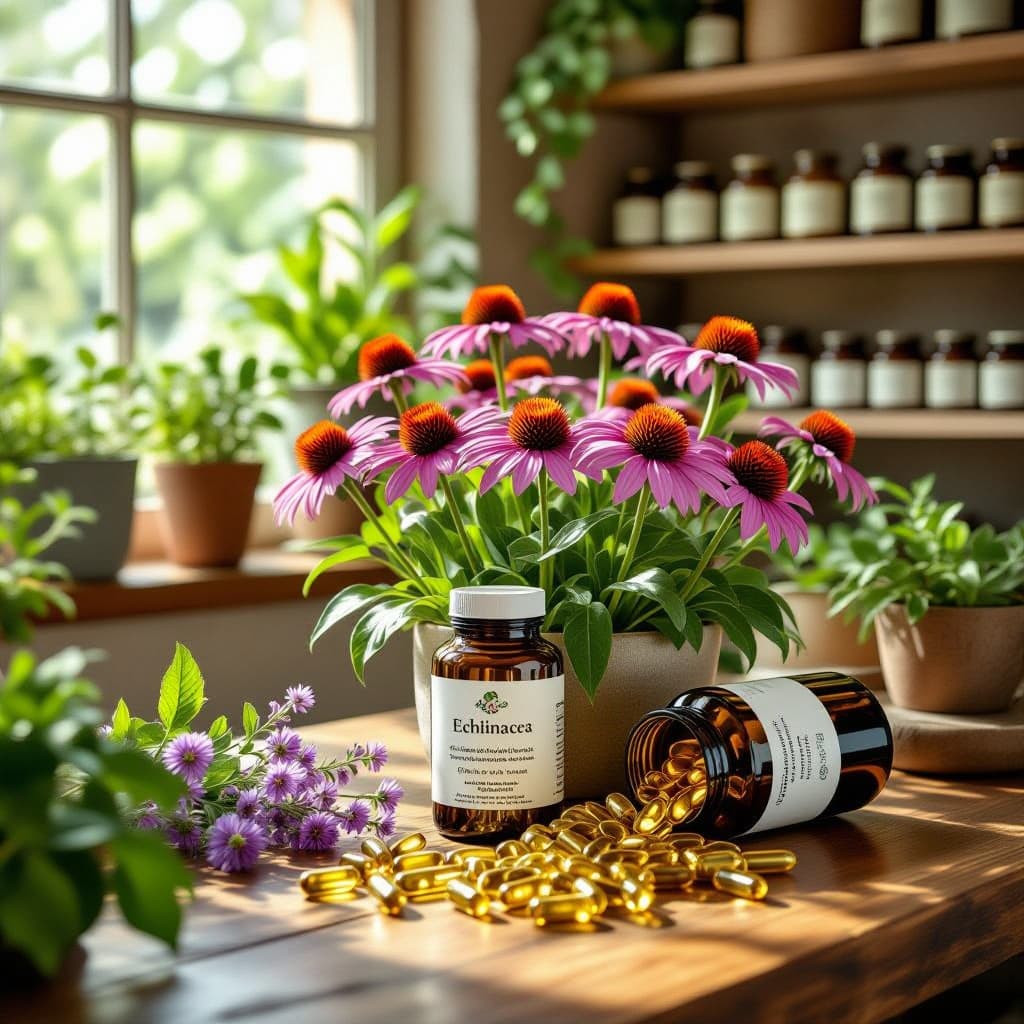
Echinacea: A Natural Immune System Booster
Echinacea is a genus of flowering plants in the daisy family, often used in traditional herbal remedies Native to North America, it has a long history of use by indigenous tribes for treating various ailments.
Supplement Summary
| Name | Echinacea |
|---|---|
| Category | Herbs & Botanicals |
| Main Uses |
|
| Effectiveness | Medium - Echinacea has been shown to be effective in supporting the immune system and reducing cold and flu symptoms, but more research is needed. |
| Common Dosage | 300 to 500 mg three times a day |
| Price Range | $10-20 per month |
| Forms Available | Capsules Tea Extract |
Pros
- ✅ Boosts immune system
- ✅ Reduces cold and flu symptoms
- ✅ Provides respiratory support
Cons / Side Effects
- ❌ May cause allergic reactions
- ❌ Not suitable for long-term use
- ❌ Effectiveness can vary
What Is Echinacea?
Echinacea is a genus of flowering plants in the daisy family, often used in traditional herbal remedies. Native to North America, it has a long history of use by indigenous tribes for treating various ailments.
How It Works
Echinacea works by stimulating the immune system to produce more white blood cells, which can help the body fight off infections and illnesses more effectively.
Who It's Best For
Echinacea is best for those seeking natural immune support, particularly during the cold and flu season.
Who Should Avoid It
People with allergies, particularly to plants in the daisy family, should avoid Echinacea. It is also not recommended for people with autoimmune disorders.
Dosage & Usage Tips
Echinacea is typically taken at the first sign of a cold or flu and continued for 7 to 10 days. The typical dosage is 300 to 500 mg three times a day.
Buying Advice & Quality Tips
When buying Echinacea supplements, look for products that have been tested by independent labs for purity and potency. Avoid products with unnecessary additives.
Price & Value
Echinacea is generally affordable, with the cost often justified by the potential benefits for immune support and respiratory health.
Final Verdict
Echinacea can be a helpful supplement for boosting the immune system and reducing cold and flu symptoms. However, as with any supplement, it's important to consult with a healthcare provider before starting any new regimen.
Additional Clinical Research
I have identified three scientific studies that specifically investigate the effects of Echinacea. Below is a summary of their key findings, categorized by health benefit, along with an assessment of the research quality.
RESEARCH SUMMARY: Echinacea
KEY FINDINGS:
Common Cold Prevention and Treatment
- A 2014 Cochrane review analyzed 24 randomized controlled trials and found that Echinacea did not significantly prevent the common cold. Evidence for its effectiveness in treating colds was inconsistent.
- The review included various Echinacea preparations and highlighted the variability in study results.
Source: Karsch-Völk et al. (2014)
View Research
https://www.cochranelibrary.com/cdsr/doi/10.1002/14651858.CD000530.pub3/full
Safety of Echinacea Products
- A 2005 systematic review assessed the safety of Echinacea-derived herbal medicinal products and concluded that they are generally safe for short-term use, with adverse events being rare and mild.
- The review analyzed data from multiple studies to evaluate the safety profile of Echinacea.
Source: Huntley et al. (2005)
View Research
https://pubmed.ncbi.nlm.nih.gov/16048355/
Drug Interactions with Echinacea
- A 2009 systematic review examined interactions between herbal medicines and prescribed drugs, noting that Echinacea can interact with certain medications by affecting cytochrome P450 enzymes, potentially altering drug metabolism.
- The review emphasized the importance of considering potential interactions when using Echinacea alongside other medications.
Source: Izzo et al. (2009)
View Research
https://pubmed.ncbi.nlm.nih.gov/19732067/
RESEARCH QUALITY ASSESSMENT:
- The studies reviewed are systematic reviews and meta-analyses, which provide comprehensive analyses of existing research and are considered high-quality evidence.
- Variability in Echinacea preparations and study methodologies contributes to inconsistent findings, highlighting the need for standardized research protocols.
- While short-term use of Echinacea appears safe, potential drug interactions necessitate caution, especially for individuals on prescription medications.
- Further research with standardized Echinacea preparations and methodologies is needed to conclusively determine its efficacy and safety.