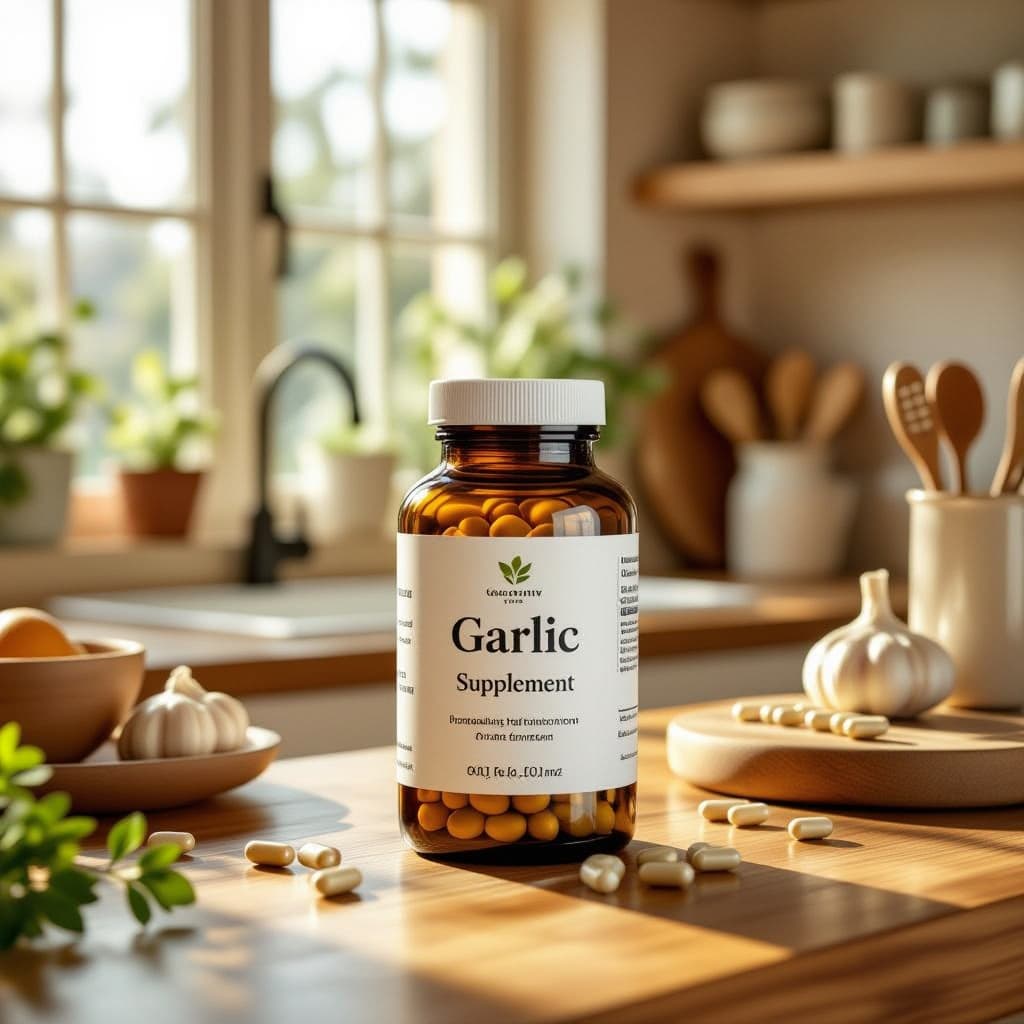
Garlic: An Ancient Remedy with Modern Health Benefits
Garlic, scientifically known as Allium sativum, is a plant belonging to the Allium family, which also includes onions and leeks Native to Central Asia, Garlic has been used for its medicinal properties for thousands of years.
Supplement Summary
| Name | Garlic |
|---|---|
| Category | Herbs & Botanicals |
| Main Uses |
|
| Effectiveness | High - backed by numerous scientific studies |
| Common Dosage | 600-1,200 mg per day |
| Price Range | $10-20 per month |
| Forms Available | Capsules Tablets Oil |
Pros
- ✅ Boosts immune function
- ✅ May lower blood pressure
- ✅ Reduces risk of heart disease
- ✅ Rich in antioxidants
- ✅ Has antimicrobial properties
Cons / Side Effects
- ❌ May cause bad breath
- ❌ Can lead to digestive issues if consumed in excess
- ❌ May interact with certain medications
What Is Garlic?
Garlic, scientifically known as Allium sativum, is a plant belonging to the Allium family, which also includes onions and leeks. Native to Central Asia, Garlic has been used for its medicinal properties for thousands of years. It's known for its pungent smell, attributable to a sulfur compound called Allicin.
How It Works
When garlic is crushed or chewed, it releases allicin, which then breaks down into other sulfur compounds that enter the bloodstream and exert various beneficial effects. These include antioxidant, anti-inflammatory, antimicrobial, and cardiovascular benefits.
Who It's Best For
Garlic is especially beneficial for people looking to boost their immune system, manage their blood pressure, or enhance their cardiovascular health.
Who Should Avoid It
People with garlic allergies, those on blood-thinning medications, or individuals with a sensitive stomach should avoid garlic.
Dosage & Usage Tips
For medicinal purposes, a typical dosage of garlic is 600-1,200 mg per day, divided into multiple doses and taken with meals. It's best to start with a lower dose and gradually increase to avoid stomach upset.
Buying Advice & Quality Tips
When purchasing a garlic supplement, look for products that contain a high amount of allicin and are enteric-coated to prevent the breakdown of allicin in the stomach.
Price & Value
Garlic supplements are generally affordable and offer excellent value for money given their wide range of health benefits.
Final Verdict
Garlic is a powerful, natural supplement with a long history of use and a growing body of scientific evidence supporting its health benefits. It's a cost-effective way to enhance your health, especially for immune and heart health.
Additional Clinical Research
RESEARCH SUMMARY: Garlic
KEY FINDINGS:
Cardiovascular Health
- Garlic consumption significantly reduces total cholesterol (TC) and low-density lipoprotein cholesterol (LDL-C) levels.
- Meta-analysis of 21 randomized controlled trials (RCTs) involving patients with dyslipidemia showed a reduction in TC by 0.64 mmol/L and LDL-C by 0.44 mmol/L.
Source: Du et al. (2024)
View Research
https://pubmed.ncbi.nlm.nih.gov/39113105/
Hypertension
- Aged garlic extract (AGE) effectively reduces blood pressure in patients with uncontrolled hypertension.
- In a 12-week double-blind randomized placebo-controlled trial with 49 participants, AGE reduced systolic blood pressure by 10 mmHg and diastolic blood pressure by 5.4 mmHg compared to placebo.
Source: Ried et al. (2019)
View Research
https://pubmed.ncbi.nlm.nih.gov/30619868/
Gastrointestinal Cancer Risk
- Garlic intake is associated with a reduced risk of gastric and colorectal cancers.
- Meta-analysis of 20 studies indicated that garlic consumption reduced the risk of gastric cancer (odds ratio [OR] = 0.65) and colorectal cancer (OR = 0.75).
Source: Wang et al. (2022)
View Research
https://pubmed.ncbi.nlm.nih.gov/35222725/
RESEARCH QUALITY ASSESSMENT:
- The studies included are meta-analyses and randomized controlled trials, which are considered high-quality evidence.
- Sample sizes vary, with some studies involving a limited number of participants, which may affect the generalizability of the findings.
- Potential limitations include heterogeneity among studies and variations in garlic preparation and dosages.
- Further large-scale, long-term studies are needed to confirm these findings and establish optimal dosages and forms of garlic for therapeutic use.