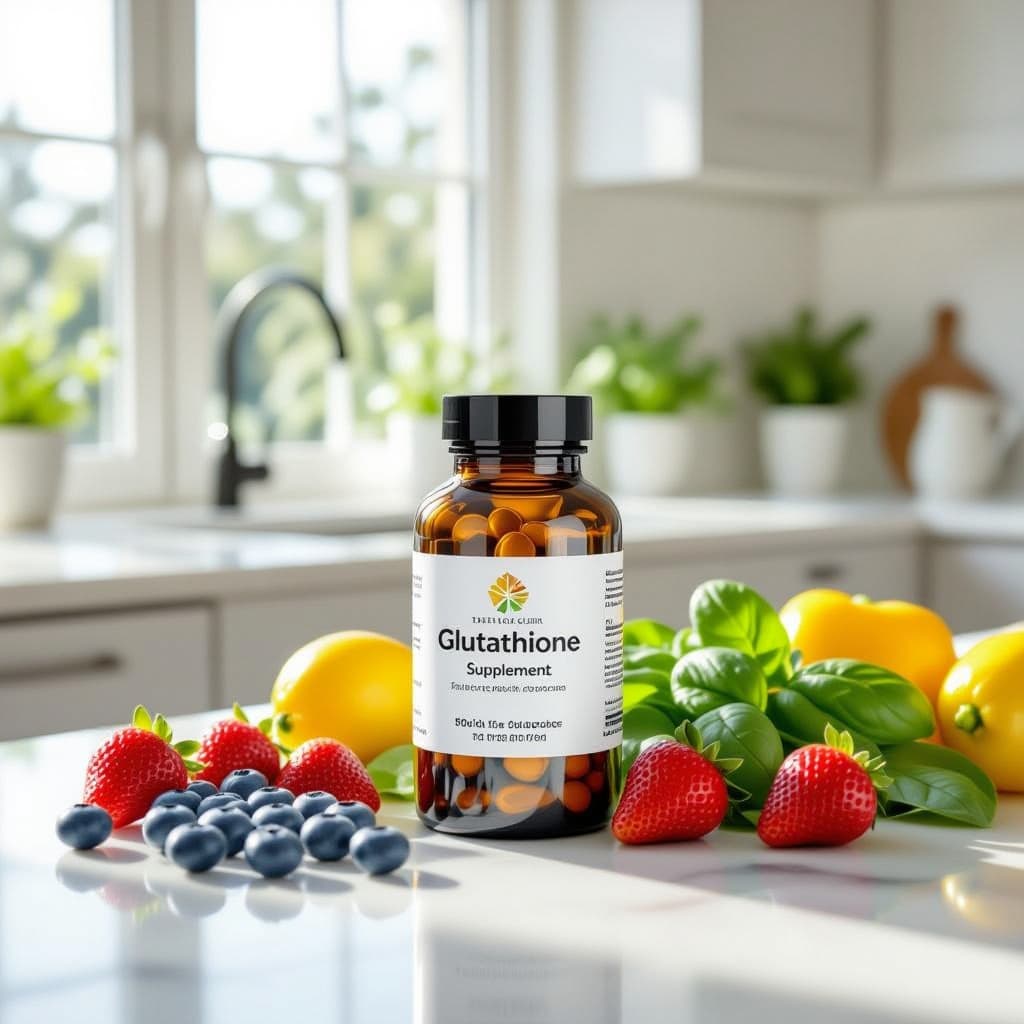
Glutathione: The Master Antioxidant for Detox and Immune Support
Glutathione, often referred to as the 'master antioxidant', is a naturally occurring peptide produced in our cells It is composed of three key amino acids - glutamate, cysteine, and glycine - and plays a crucial role in maintaining cellular health and function.
Supplement Summary
| Name | Glutathione |
|---|---|
| Category | Antioxidants |
| Main Uses |
|
| Effectiveness | High, due to its potent antioxidant properties and crucial role in body's detoxification process. |
| Common Dosage | 500-1000 mg per day |
| Price Range | $20-50 per month |
| Forms Available | Capsules Powder Liquid Liposomal |
Pros
- ✅ Powerful antioxidant
- ✅ Supports immune system
- ✅ Helps detoxify the body
- ✅ May improve certain health conditions
- ✅ Can be boosted through diet and supplements
Cons / Side Effects
- ❌ May cause side effects in some individuals
- ❌ Oral supplements may not be well-absorbed
- ❌ High-quality supplements can be expensive
What Is Glutathione?
Glutathione, often referred to as the 'master antioxidant', is a naturally occurring peptide produced in our cells. It is composed of three key amino acids - glutamate, cysteine, and glycine - and plays a crucial role in maintaining cellular health and function.
How It Works
Glutathione works by neutralizing harmful free radicals and reducing oxidative stress in the body. It also aids in the detoxification process by binding to toxins and helping to eliminate them from the body. Additionally, it plays a role in DNA synthesis and repair, protein synthesis, and immune system function.
Who It's Best For
Glutathione is particularly beneficial for individuals looking to boost their antioxidant intake, support their immune system, detoxify their body, or manage certain health conditions. It may also be beneficial for athletes or those under high levels of physical stress.
Who Should Avoid It
People with milk protein allergies, those who are pregnant or breastfeeding, and those undergoing treatment for cancer should avoid glutathione supplements unless advised by a healthcare professional.
Dosage & Usage Tips
For oral supplementation, a typical dosage of glutathione ranges from 500 to 1000 mg daily. It's best taken on an empty stomach for maximum absorption.
Buying Advice & Quality Tips
When selecting a glutathione supplement, look for 'reduced' forms as they are more absorbable. Also, consider products that contain additional components like 'N-acetyl cysteine' or 'Alpha Lipoic Acid' that can help increase glutathione production in the body.
Price & Value
The cost of glutathione supplements can vary widely depending on the brand, dosage, and form. However, the potential health benefits often justify the cost for many individuals.
Final Verdict
In conclusion, glutathione is a powerful antioxidant with numerous health benefits. Those considering glutathione supplementation should discuss it with their healthcare provider to ensure it's right for them.
Additional Clinical Research
RESEARCH SUMMARY: Glutathione
KEY FINDINGS:
Parkinson's Disease
- Intravenous glutathione was well tolerated in Parkinson's disease patients but showed no significant improvement in motor symptoms over a 4-week period.
- Study details: Randomized, double-blind, placebo-controlled pilot trial with 21 participants; 11 received glutathione, and 10 received placebo.
Source: Hauser et al. (2009)
View Research
https://pubmed.ncbi.nlm.nih.gov/19230029/
Glutathione Supplementation
- Daily oral glutathione supplementation increased glutathione levels in various body compartments, including blood and lymphocytes, over a 6-month period.
- Study details: Randomized, double-blind, placebo-controlled trial with 54 non-smoking adults; participants received either 250 mg or 1,000 mg of glutathione daily.
Source: Richie et al. (2015)
View Research
https://pubmed.ncbi.nlm.nih.gov/24791752/
Depression
- Meta-analysis revealed reduced glutathione levels in the occipital cortex of patients with major depressive disorder, suggesting a role of oxidative stress in depression.
- Study details: Systematic review and meta-analysis of 8 studies involving 230 patients with depression and 216 healthy controls.
Source: Bell et al. (2024)
View Research
https://pubmed.ncbi.nlm.nih.gov/39708105/
RESEARCH QUALITY ASSESSMENT:
- Study 1: Small sample size limits generalizability; pilot nature suggests preliminary findings.
- Study 2: Well-designed with adequate sample size; findings support glutathione bioavailability through oral supplementation.
- Study 3: Meta-analysis provides comprehensive overview; however, heterogeneity among included studies may affect conclusions.
- Further large-scale, long-term studies are needed to confirm these findings and explore therapeutic implications.