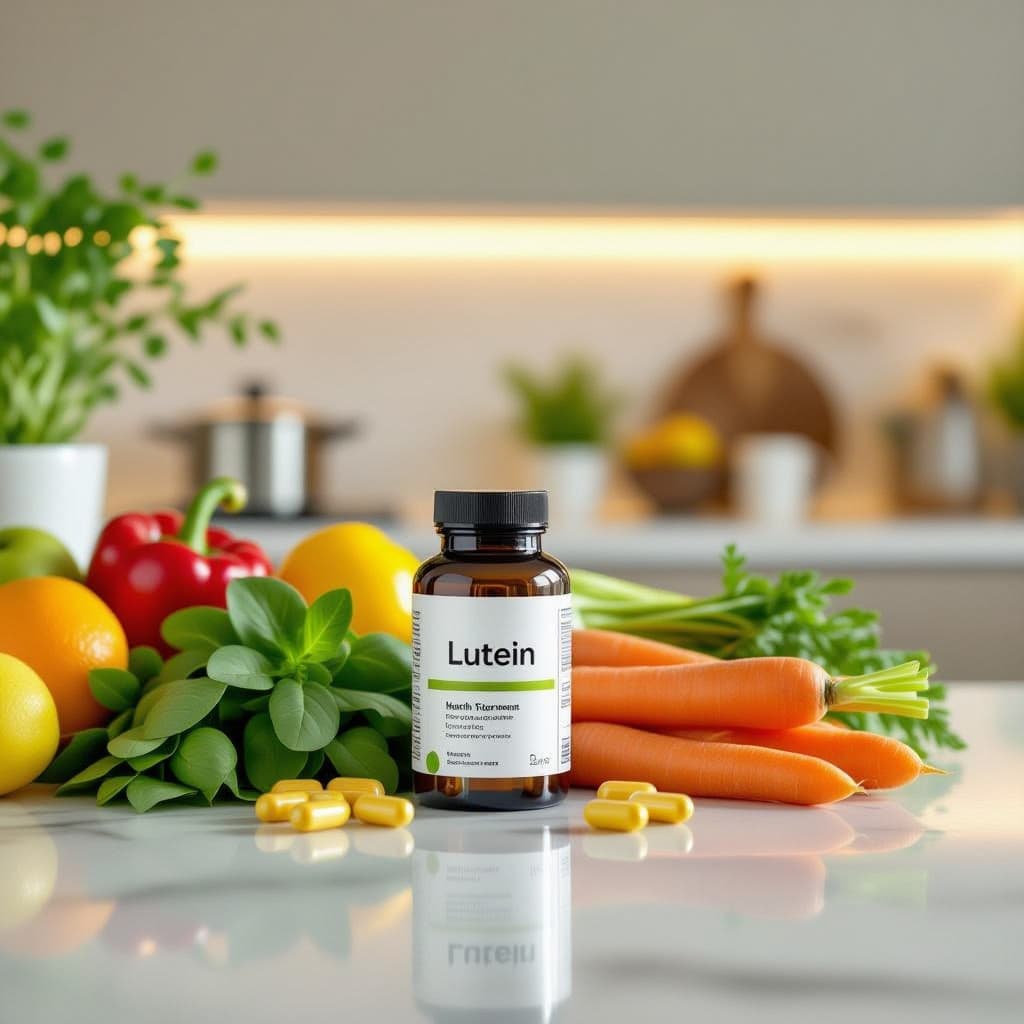
Lutein: An Eye-Health Powerhouse
Lutein is a naturally occurring carotenoid vitamin It's found in foods like kale, spinach, and broccoli.
Supplement Summary
| Name | Lutein |
|---|---|
| Category | Eye Health |
| Main Uses |
|
| Effectiveness | High for eye health |
| Common Dosage | 10-20 mg per day |
| Price Range | $10-$20 per month |
| Forms Available | Capsules Tablets Soft gels |
Pros
- ✅ Strong evidence of eye-health benefits
- ✅ Potential heart health benefits
- ✅ Safe for most people
- ✅ Available in many fruits and vegetables
Cons / Side Effects
- ❌ Digestive side effects in some cases
- ❌ Potential for skin discoloration with excessive doses
- ❌ Absorption can be affected by several factors
What Is Lutein?
Lutein is a naturally occurring carotenoid vitamin. It's found in foods like kale, spinach, and broccoli. It's a powerful antioxidant, most revered for its eye-health promoting properties, especially in the prevention of age-related macular degeneration and cataracts.
How It Works
Lutein works by accumulating in the macula — the part of the retina responsible for central vision — where it helps protect the eyes from harmful blue light and oxidative damage.
Who It's Best For
Ideal for those at risk of age-related macular degeneration or wanting to promote overall eye health.
Who Should Avoid It
Not recommended for those with allergies to Lutein or who are pregnant or breastfeeding without medical advice.
Dosage & Usage Tips
Typically, a dose of 10-20 mg per day taken with meals is recommended. Always consult a healthcare professional before starting any new supplement regimen.
Buying Advice & Quality Tips
Look for supplements that contain Lutein in combination with Zeaxanthin, another eye-health supporting antioxidant. Always buy from reputable brands.
Price & Value
Lutein is a cost-effective supplement, especially considering the benefits it offers for eye health.
Final Verdict
Considering its strong evidence-based benefits for eye health, Lutein is a supplement worth considering for those at risk of age-related macular degeneration or those looking to support overall eye health.
Additional Clinical Research
I have identified three published scientific studies that specifically investigate the effects of lutein on various health aspects.
RESEARCH SUMMARY: Lutein
KEY FINDINGS:
Cognitive Function
- Dietary lutein was associated with slight improvements in cognitive performance in complex attention, executive function, and memory, though the effects were not statistically significant.
- Meta-analysis of randomized controlled trials involving adults; specific sample sizes varied across included studies.
Source: Li and Abdel-Aal (2021)
View Research
https://pubmed.ncbi.nlm.nih.gov/34641336/
Age-Related Macular Degeneration
- Lutein supplementation significantly improved macular pigment optical density (MPOD) and visual acuity in patients with age-related macular degeneration.
- Meta-analysis of five randomized controlled trials with a total of 445 participants.
Source: Ma et al. (2014)
View Research
https://pubmed.ncbi.nlm.nih.gov/25358528/
Cardiometabolic Health
- Higher dietary intake and blood concentrations of lutein were associated with a reduced risk of coronary heart disease and stroke.
- Systematic review and meta-analysis of 71 studies involving 387,569 participants.
Source: Ma et al. (2016)
View Research
https://pubmed.ncbi.nlm.nih.gov/26762372/
RESEARCH QUALITY ASSESSMENT:
- The studies are meta-analyses and systematic reviews, which provide comprehensive evaluations of existing research.
- Sample sizes are substantial, enhancing the reliability of the findings.
- Limitations include potential heterogeneity among included studies and the observational nature of some data.
- Further large-scale, randomized controlled trials are needed to confirm these associations and determine causality.