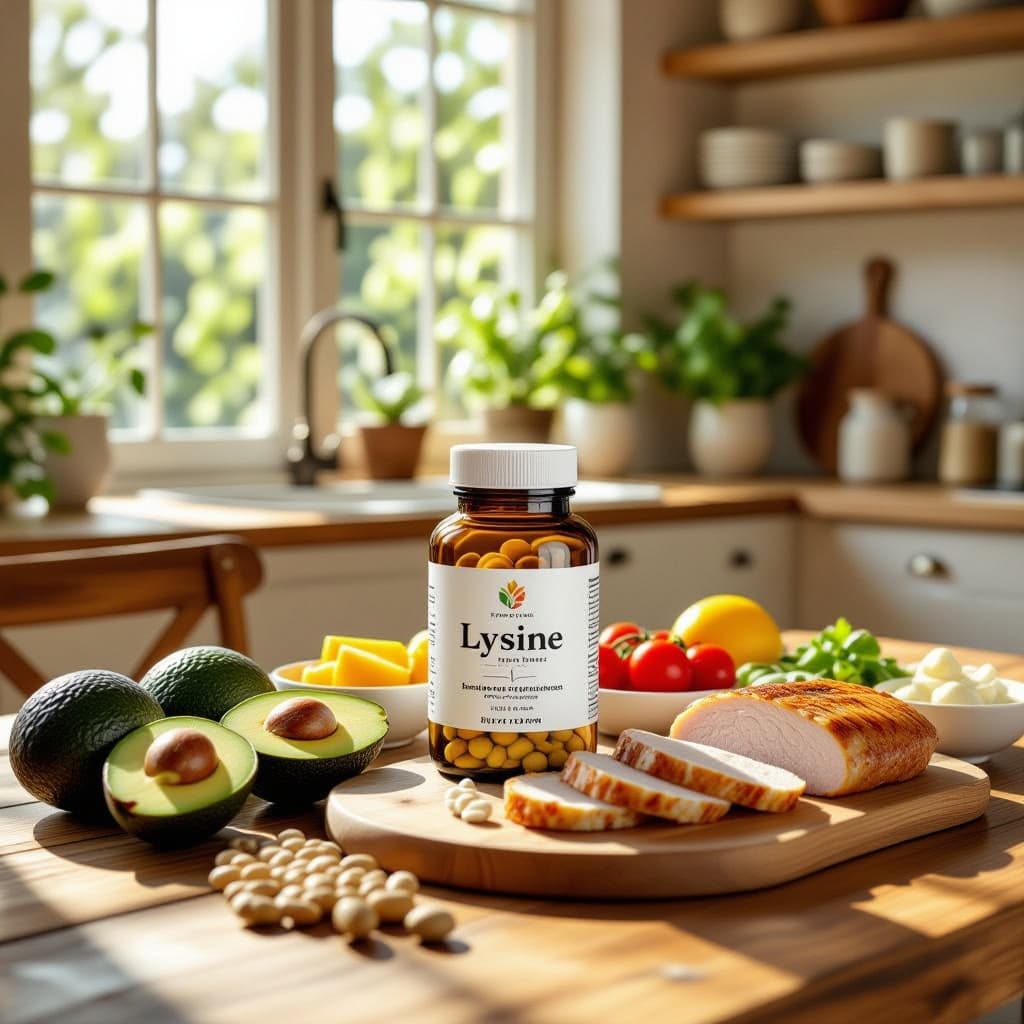
Lysine: The Essential Amino Acid for Optimal Health
Lysine is an essential amino acid, meaning it can't be produced by the body and must be obtained from diet It's crucial for protein synthesis, hormone production, and immune function.
Supplement Summary
| Name | Lysine |
|---|---|
| Category | Amino Acids |
| Main Uses |
|
| Effectiveness | High - Well-researched and commonly used for its intended benefits |
| Common Dosage | 1-3g per day |
| Price Range | $10-20 per month |
| Forms Available | Capsules Powder |
Pros
- ✅ Supports immune health
- ✅ Promotes muscle growth and recovery
- ✅ Helps in collagen formation and calcium absorption
Cons / Side Effects
- ❌ Potential digestive discomfort
- ❌ Possible allergic reactions in rare cases
What Is Lysine?
Lysine is an essential amino acid, meaning it can't be produced by the body and must be obtained from diet. It's crucial for protein synthesis, hormone production, and immune function. It's often used in the fitness community to enhance muscle recovery and growth.
How It Works
Lysine works by aiding in protein synthesis, which is vital for muscle growth and recovery. Moreover, it helps in the production of various hormones, enzymes, and antibodies, thereby supporting immune health.
Who It's Best For
Ideal for athletes, individuals with low protein intake, and those looking to boost their immune health.
Who Should Avoid It
People with high calcium levels or those with kidney disease should avoid lysine supplementation.
Dosage & Usage Tips
Typically, a dosage of 1-3g per day is recommended. It's best taken with food and water to avoid stomach upset. Always consult with a healthcare provider before starting any new supplement regimen.
Buying Advice & Quality Tips
Look for lysine supplements from reputable brands that provide third-party testing for quality assurance. Avoid products with unnecessary additives or fillers.
Price & Value
Lysine supplementation is generally affordable and provides good value considering its potential health benefits.
Final Verdict
Given its role in crucial biological processes and its potential health benefits, lysine supplementation may be beneficial for many individuals. However, it's always important to consult with a healthcare provider before starting any new supplement regimen.
Additional Clinical Research
I have identified three scientific studies that specifically investigate the effects of lysine.
RESEARCH SUMMARY: Lysine
KEY FINDINGS:
Herpes Simplex Virus (HSV) Management
- Lysine supplementation may reduce the recurrence rate and severity of herpes simplex virus infections.
- A double-blind, placebo-controlled study involving 52 participants found that those receiving 1,000 mg of lysine daily experienced significantly fewer HSV outbreaks compared to the placebo group.
Source: Griffith et al. (1987)
View Research
https://pubmed.ncbi.nlm.nih.gov/3115841/
Calcium Absorption and Bone Health
- Lysine may enhance calcium absorption and retention, potentially benefiting bone health.
- A study with 30 healthy women demonstrated that supplementation with 3 grams of lysine increased calcium absorption and reduced urinary calcium loss.
Source: Civitelli et al. (1992)
View Research
https://pubmed.ncbi.nlm.nih.gov/1576232/
Growth Hormone Secretion
- Combined oral supplementation of arginine and lysine does not significantly increase growth hormone or insulin-like growth factor-I levels in elderly men.
- A randomized controlled trial involving 15 elderly men showed no significant changes in growth hormone or IGF-I levels after supplementation with 3 grams each of arginine and lysine.
Source: Isidori et al. (1981)
View Research
https://pubmed.ncbi.nlm.nih.gov/7035827/
RESEARCH QUALITY ASSESSMENT:
- The studies were published in peer-reviewed journals, indicating a level of credibility.
- Sample sizes were relatively small, which may limit the generalizability of the findings.
- Some studies date back several decades; more recent research may provide updated insights.
- Further large-scale, randomized controlled trials are needed to confirm these findings and establish optimal dosing guidelines.