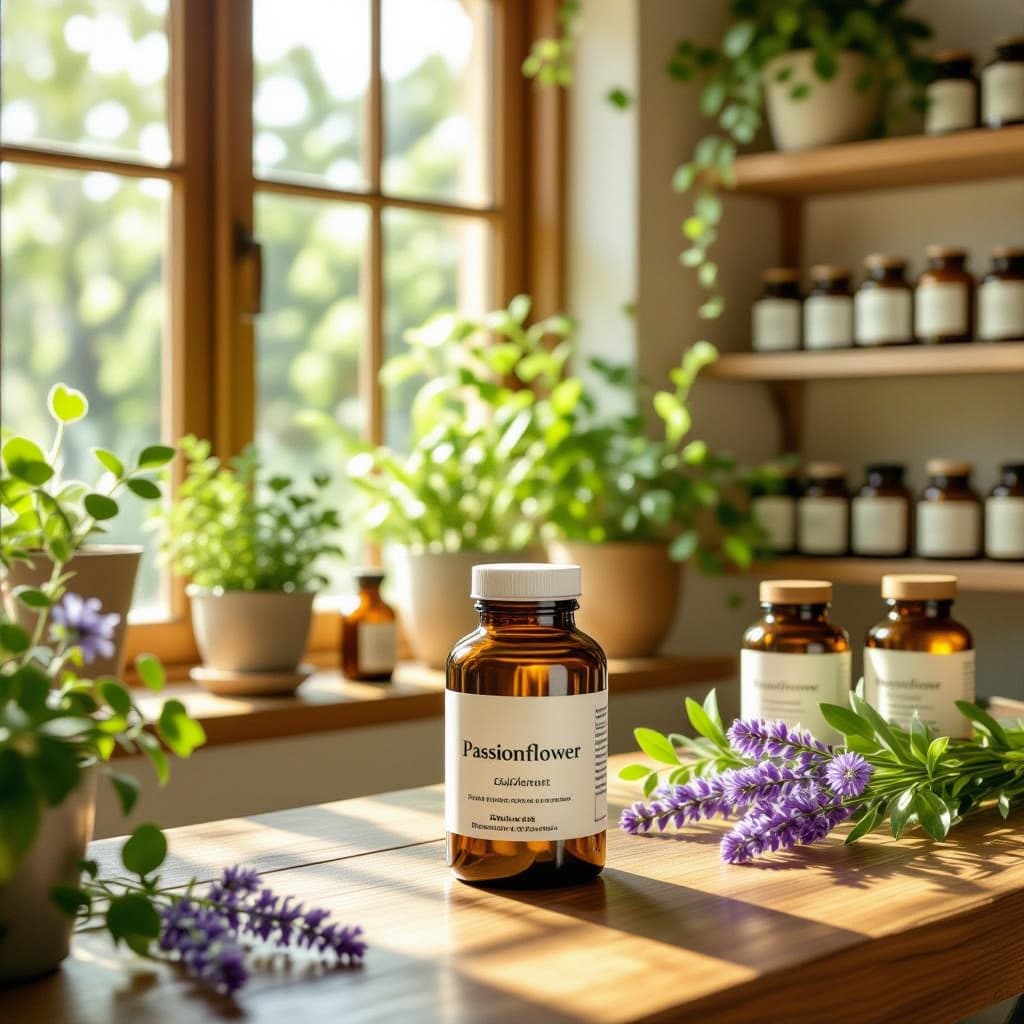
Unleashing the Power of Passionflower: An Evidence-Based Review
Passionflower is a plant native to the Southeastern United States, but now cultivated worldwide Known for its beautiful flowers, it's primarily used for therapeutic purposes, particularly in managing sleep disorders and anxiety.
Supplement Summary
| Name | Passionflower |
|---|---|
| Category | Herbs & Botanicals |
| Main Uses |
|
| Effectiveness | High - Supported by multiple clinical trials |
| Common Dosage | 200-300 mg daily |
| Price Range | $-$$ |
| Forms Available | Capsules Tea Liquid extract |
Pros
- ✅ Effective natural anxiety relief
- ✅ Improves sleep quality
- ✅ Helps manage ADHD symptoms in children
- ✅ Potential to aid in opiate withdrawal
- ✅ Generally safe with few side effects
Cons / Side Effects
- ❌ May cause drowsiness
- ❌ Possibility of allergic reactions
- ❌ Not recommended for pregnant or breastfeeding women
- ❌ Interactions with certain medications
What Is Passionflower?
Passionflower is a plant native to the Southeastern United States, but now cultivated worldwide. Known for its beautiful flowers, it's primarily used for therapeutic purposes, particularly in managing sleep disorders and anxiety.
How It Works
Passionflower works by increasing the levels of gamma-aminobutyric acid (GABA) in the brain, a compound that inhibits the activity of neurons, resulting in a calming effect on the body.
Who It's Best For
Individuals struggling with sleep disorders, anxiety, or ADHD. Also potentially beneficial for those dealing with opiate withdrawal.
Who Should Avoid It
Pregnant or breastfeeding women, and those with surgery scheduled within two weeks. Individuals on medications like sedatives should consult a healthcare provider before use.
Dosage & Usage Tips
The typical dosage is between 200-300 mg daily, taken before bedtime for sleep improvement. For managing anxiety, it may be divided into multiple doses throughout the day.
Buying Advice & Quality Tips
Look for products from reputable companies that adhere to Good Manufacturing Practices (GMP) and have third-party testing for quality assurance.
Price & Value
The cost of Passionflower supplements is relatively low compared to prescription medications for anxiety and sleep disorders, making it a cost-effective alternative for many.
Final Verdict
Passionflower is a potent natural remedy for anxiety and sleep disorders, with a growing body of clinical evidence supporting its use. However, as with all supplements, it's essential to consult a health professional before starting its use.
Additional Clinical Research
Here is a summary of scientific studies specifically investigating the effects of Passionflower (Passiflora incarnata) on various health aspects:
RESEARCH SUMMARY: Passionflower
KEY FINDINGS:
Sleep Quality Improvement
- Passionflower extract significantly reduced stress levels and improved sleep quality in individuals with stress and insomnia.
- Randomized, double-blind, placebo-controlled study with 65 participants; 32 received Passionflower extract, and 33 received a placebo over 30 days.
Source: Harit et al. (2024)
View Research
https://pubmed.ncbi.nlm.nih.gov/38646244/
Anxiety Reduction
- Passionflower extract was as effective as oxazepam in treating generalized anxiety disorder, with fewer job performance issues reported.
- Double-blind, randomized trial involving 36 outpatients diagnosed with generalized anxiety disorder; 18 received Passionflower extract, and 18 received oxazepam over 4 weeks.
Source: Akhondzadeh et al. (2001)
View Research
https://pubmed.ncbi.nlm.nih.gov/11679026/
Opiate Withdrawal Management
- Combining Passionflower extract with clonidine was more effective in alleviating mental symptoms of opiate withdrawal than clonidine alone.
- Double-blind, randomized controlled trial with 65 opiate addicts; participants received either Passionflower extract plus clonidine or clonidine plus placebo over 14 days.
Source: Akhondzadeh et al. (2001)
View Research
https://pubmed.ncbi.nlm.nih.gov/11679027/
RESEARCH QUALITY ASSESSMENT:
- Studies employed randomized, double-blind, placebo-controlled designs, enhancing the reliability of findings.
- Sample sizes were relatively small, which may limit the generalizability of results.
- Short study durations (ranging from 14 to 30 days) may not capture long-term effects or potential side effects.
- Further large-scale, long-term studies are needed to confirm these findings and establish comprehensive safety profiles.