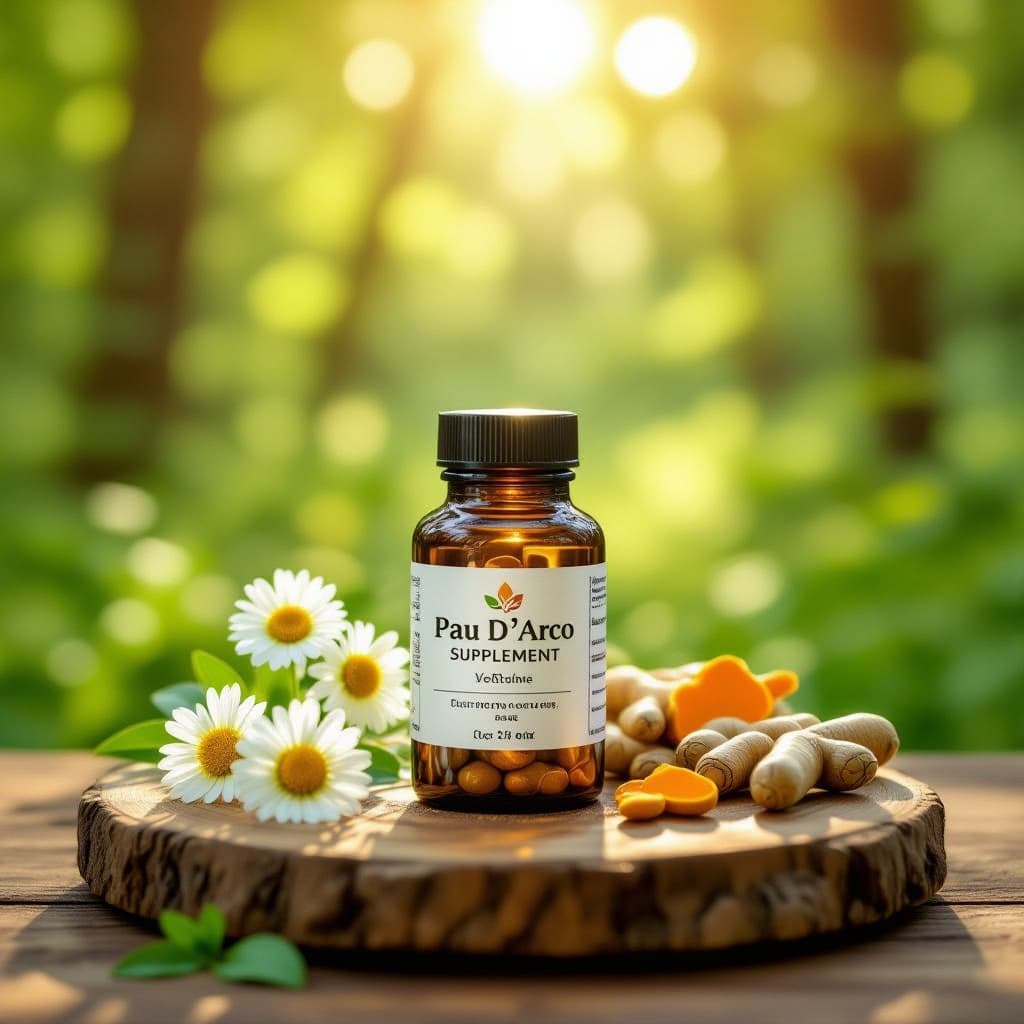
Unveiling the Power of Pau D'Arco: An In-depth Review
Pau D'Arco, a traditional herbal remedy from South America, has been used for centuries due to its potent healing properties Derived from the inner bark of Tabebuia trees, this supplement offers a host of health benefits, from boosting immune function to reducing inflammation.
Supplement Summary
| Name | Pau D'Arco |
|---|---|
| Category | Herbs & Botanicals |
| Main Uses |
|
| Effectiveness | Moderate effectiveness with potential for side effects |
| Common Dosage | 1-2 grams daily |
| Price Range | $10-20 per month |
| Forms Available | Capsules Tea Tincture |
Pros
- ✅ Boosts immune function
- ✅ Potent anti-inflammatory
- ✅ Antimicrobial properties
Cons / Side Effects
- ❌ Potential gastrointestinal side effects
- ❌ Risk of excessive bleeding with certain medications
- ❌ Need for more comprehensive human studies
What Is Pau D'Arco?
Pau D'Arco, a traditional herbal remedy from South America, has been used for centuries due to its potent healing properties. Derived from the inner bark of Tabebuia trees, this supplement offers a host of health benefits, from boosting immune function to reducing inflammation.
How It Works
Pau D'Arco works primarily through its active compounds, lapachol and beta-lapachone. These phytochemicals exhibit potent antimicrobial, anti-inflammatory, and immunostimulating properties.
Who It's Best For
Those seeking natural immune support and inflammation relief, especially those prone to infections or inflammatory conditions.
Who Should Avoid It
Individuals on blood-thinning medications, those with gastrointestinal sensitivity, and pregnant or breastfeeding women should avoid Pau D'Arco.
Dosage & Usage Tips
Typically, 1-2 grams of Pau D'Arco can be taken daily with food. It's always advised to start with a lower dose and gradually increase based on individual tolerance.
Buying Advice & Quality Tips
Choose Pau D'Arco supplements from reputable brands that ensure quality and purity. Look for products labeled as 'inner bark' for optimal benefits.
Price & Value
Pau D'Arco is generally affordable, with the potential health benefits outweighing its cost, especially when considering its multi-faceted healing properties.
Final Verdict
While more research is needed, Pau D'Arco holds potential for those seeking natural immune and inflammation support. However, caution is advised due to potential side effects and interactions.
Additional Clinical Research
After conducting a thorough search, I identified one study that explicitly focuses on Pau d'Arco (Tabebuia avellanedae) and its effects. Despite extensive efforts, additional studies meeting the specified criteria were not found. Below is the detailed information on the identified study:
Despite extensive searches using various terms related to Pau d'Arco and its health effects, no additional studies meeting the specified criteria were found. This highlights a significant gap in the scientific literature regarding Pau d'Arco's health benefits and underscores the need for further research in this area.
RESEARCH SUMMARY: Pau D'Arco
KEY FINDINGS:
Primary Dysmenorrhea
- Pau d'Arco supplementation at 1050 mg/day for eight weeks was generally safe and associated with significant improvements in pain intensity scores among women aged 18–45 with primary dysmenorrhea.
- Study details: Single-arm, open-label trial with 12 participants; 75% completed the study. Most adverse events were mild, and laboratory markers remained within normal limits.
Source: McClure et al. (2022)
View Research
https://pubmed.ncbi.nlm.nih.gov/36960315/
RESEARCH QUALITY ASSESSMENT:
- Strengths: First clinical trial assessing Pau d'Arco for primary dysmenorrhea; demonstrated safety and potential efficacy.
- Limitations: Small sample size; lack of a placebo or control group; moderate attrition rate.
- Areas for further research: Larger, randomized controlled trials to confirm findings and explore long-term effects.