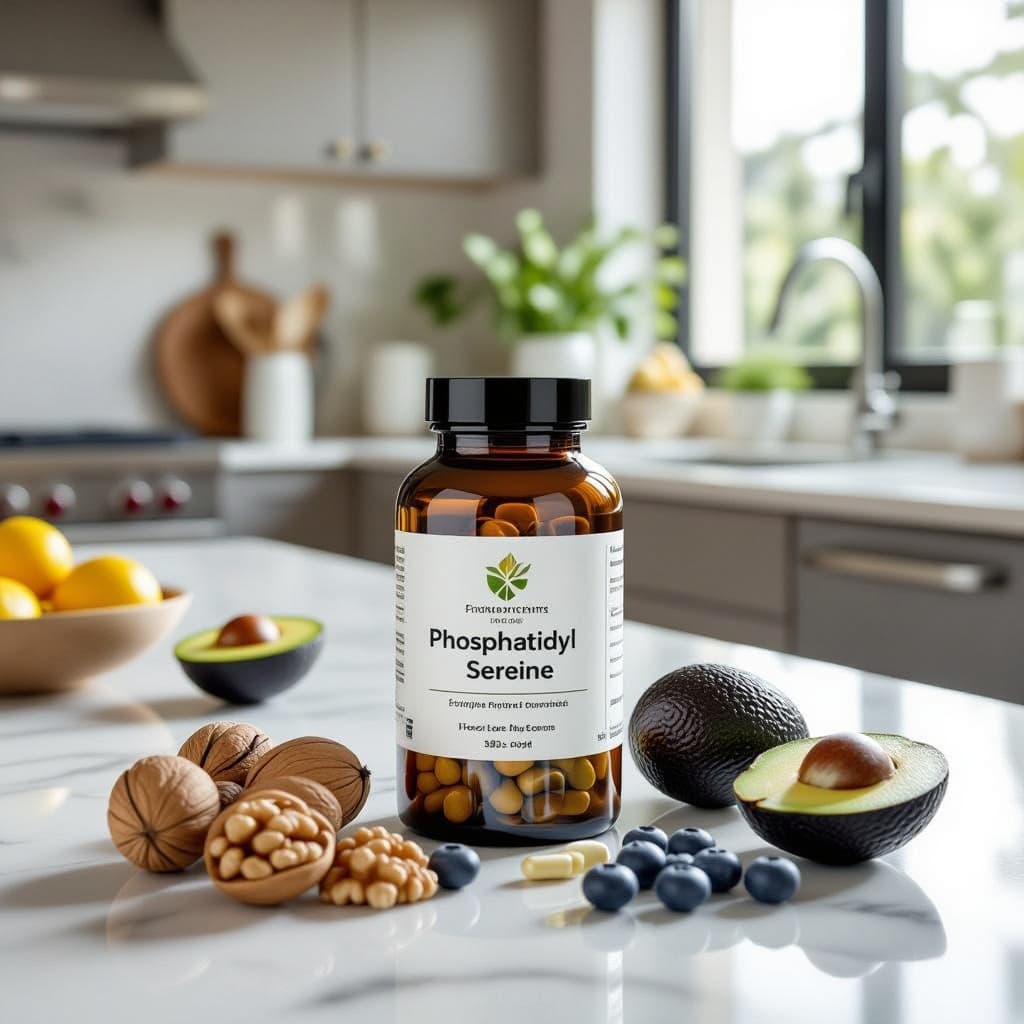
Unleashing the Brain-Boosting Power of Phosphatidylserine
Phosphatidylserine is a naturally occurring phospholipid present in the brain's neuronal tissue It plays a crucial role in maintaining cognitive function, supporting memory, and managing stress.
Supplement Summary
| Name | Phosphatidylserine |
|---|---|
| Category | Cognitive Function / Nootropics |
| Main Uses |
|
| Effectiveness | High effectiveness for cognitive enhancement and stress relief |
| Common Dosage | 100-300mg daily |
| Price Range | $25-50 per month |
| Forms Available | Capsules Powder |
Pros
- ✅ Effective in boosting cognitive function
- ✅ Helpful in stress management
- ✅ Potential ADHD symptom relief
Cons / Side Effects
- ❌ Possible insomnia
- ❌ May cause stomach upset
- ❌ Potential headaches
What Is Phosphatidylserine?
Phosphatidylserine is a naturally occurring phospholipid present in the brain's neuronal tissue. It plays a crucial role in maintaining cognitive function, supporting memory, and managing stress.
How It Works
By ensuring the health and integrity of cell membranes, phosphatidylserine facilitates efficient communication between brain cells, leading to improved memory, focus, and cognitive clarity.
Who It's Best For
Ideal for individuals seeking cognitive enhancement, stress relief, and support for ADHD management.
Who Should Avoid It
Those with blood clotting disorders or individuals taking anticoagulant medications should avoid phosphatidylserine.
Dosage & Usage Tips
Typically, a daily dose of 100-300mg taken with food is recommended for best results. Always start with the lowest possible dose and gradually increase as needed.
Buying Advice & Quality Tips
Look for products that contain 'soy lecithin-derived phosphatidylserine' on the label to ensure you're getting a high-quality product.
Price & Value
While the cost of phosphatidylserine supplements can vary, the cognitive benefits they offer make them a worthwhile investment.
Final Verdict
With its cognitive enhancement and stress-relieving properties, phosphatidylserine is a powerful addition to any nootropic regimen.
Additional Clinical Research
Here are three published scientific studies specifically investigating the effects of phosphatidylserine (PS):
RESEARCH SUMMARY: Phosphatidylserine
KEY FINDINGS:
Cognitive Function in Older Adults
- Phosphatidylserine supplementation improved cognitive functions, including arithmetic performance, similarity tests, and short-term memory in older adults with mild cognitive impairment.
- Randomized, double-blind, placebo-controlled trial with 190 participants over 12 months.
Source: Zhang et al. (2025)
View Research
https://pubmed.ncbi.nlm.nih.gov/39317299/
Attention-Deficit Hyperactivity Disorder (ADHD) in Children
- Phosphatidylserine supplementation significantly improved ADHD symptoms and short-term auditory memory in children.
- Randomized, double-blind, placebo-controlled trial with 36 children over 2 months.
Source: Hirayama et al. (2013)
View Research
https://pubmed.ncbi.nlm.nih.gov/23495677/
Cognitive Performance in Healthy Adults
- A formulation containing phosphatidylserine and whole coffee cherry extract improved memory, accuracy, focus, and learning in healthy adults with self-reported memory problems.
- Randomized, double-blind, placebo-controlled study with 138 participants over 42 days.
Source: Doma et al. (2023)
View Research
https://link.springer.com/article/10.1007/s40120-023-00454-z
RESEARCH QUALITY ASSESSMENT:
- All studies were randomized, double-blind, placebo-controlled trials, enhancing the reliability of the findings.
- Sample sizes varied, with the largest study including 190 participants, providing a robust data set.
- Some studies had relatively short durations (e.g., 2 months), which may limit the understanding of long-term effects.
- Further research with larger sample sizes and longer follow-up periods is recommended to confirm these findings and assess long-term safety and efficacy.