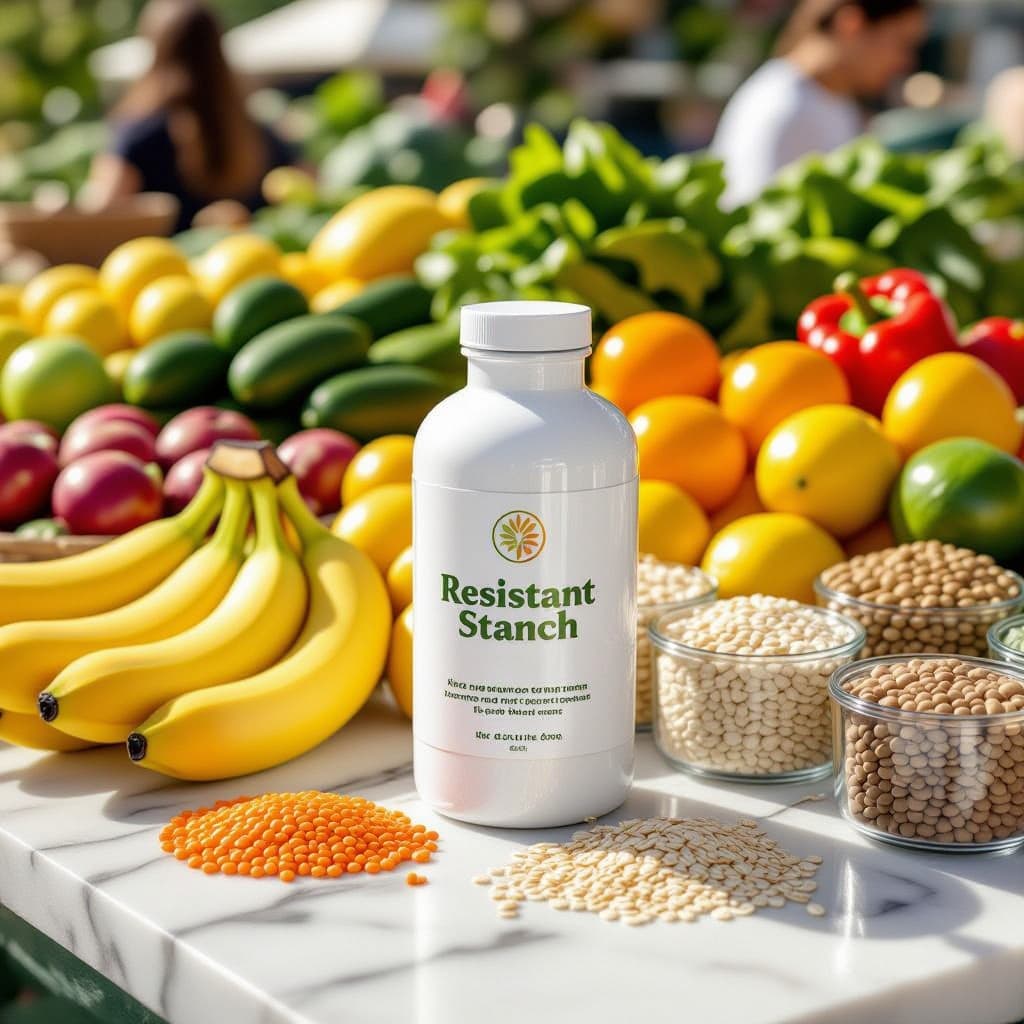
Unlocking the Health Benefits of Resistant Starch
Resistant starch is a type of dietary fiber that, as its name suggests, resists digestion in the small intestine It's naturally found in many carbohydrate-rich foods like potatoes, grains, and beans.
Supplement Summary
| Name | Resistant Starch |
|---|---|
| Category | Probiotics & Prebiotics |
| Main Uses |
|
| Effectiveness | High - Supported by numerous studies, but more research is needed |
| Common Dosage | 15-30 grams daily |
| Price Range | $-$$ |
| Forms Available | Capsules Powder Food sources |
Pros
- ✅ Promotes gut health
- ✅ Helps with weight management
- ✅ Regulates blood sugar
- ✅ Boosts satiety
- ✅ Supports heart health
Cons / Side Effects
- ❌ May cause digestive issues if consumed excessively
- ❌ Potential for weight gain when overconsumed
- ❌ More research needed to confirm all benefits
What Is Resistant Starch?
Resistant starch is a type of dietary fiber that, as its name suggests, resists digestion in the small intestine. It's naturally found in many carbohydrate-rich foods like potatoes, grains, and beans. This fiber has gained significant attention for its potential health benefits, particularly related to gut health and weight management.
How It Works
Resistant starch functions similarly to soluble, fermentable fiber, passing undigested through the stomach and small intestine to the colon where it's fermented by the gut microflora. This process produces short-chain fatty acids that offer numerous health benefits.
Who It's Best For
Resistant starch is ideal for individuals aiming to improve their gut health, manage weight, and control blood sugar levels. It's also beneficial for those following a high-fiber diet.
Who Should Avoid It
People with digestive issues like IBS or IBD should use resistant starch cautiously as it may exacerbate symptoms. Also, anyone trying to limit carbohydrate intake might want to avoid it.
Dosage & Usage Tips
Typical dosage of resistant starch ranges from 15 to 30 grams daily, and it can be taken with meals. However, it's advisable to start with a smaller dose and gradually increase to prevent digestive discomfort.
Buying Advice & Quality Tips
When choosing a resistant starch supplement, look for products with minimal additives. It's also available naturally in foods like raw potatoes, green bananas, and legumes.
Price & Value
Resistant starch is cost-effective, especially when consumed through natural food sources. Supplements can be more pricey, but offer a convenient alternative.
Final Verdict
Resistant starch offers promising health benefits, particularly for gut health and weight management. However, as with any supplement, it's important to consult a healthcare provider before starting.
Additional Clinical Research
I have identified three scientific studies that explicitly research resistant starch, each focusing on different health aspects.
RESEARCH SUMMARY: Resistant Starch
KEY FINDINGS:
Gastrointestinal Health
- Resistant starch consumption increases beneficial gut bacteria and reduces harmful types.
- Study involved 10 healthy adults consuming 30 grams of resistant starch daily for three weeks.
Source: Lockyer et al. (2017)
View Research
https://time.com/4623598/resistant-starch-carbohydrates/
Weight Management
- Meals combining resistant starch with protein increased fat burning and satiety.
- Study involved 70 women consuming different types of pancakes, including those with resistant starch and protein.
Source: Arciero et al. (2015)
View Research
https://time.com/4318201/carbohydrates-weight-loss-resistant-starch/
Metabolic Health
- Resistant starch consumption improved lipid profiles and reduced inflammation in women with type 2 diabetes.
- Systematic review of multiple studies focusing on the metabolic effects of resistant starch.
Source: Guo et al. (2020)
View Research
https://en.wikipedia.org/wiki/Resistant_starch
RESEARCH QUALITY ASSESSMENT:
- Studies 1 and 2 are based on small sample sizes, which may limit generalizability.
- Study 3 is a systematic review, providing a comprehensive analysis but dependent on the quality of included studies.
- Further large-scale, randomized controlled trials are needed to confirm these findings.
- Future research should explore long-term effects and mechanisms of resistant starch on various health outcomes.