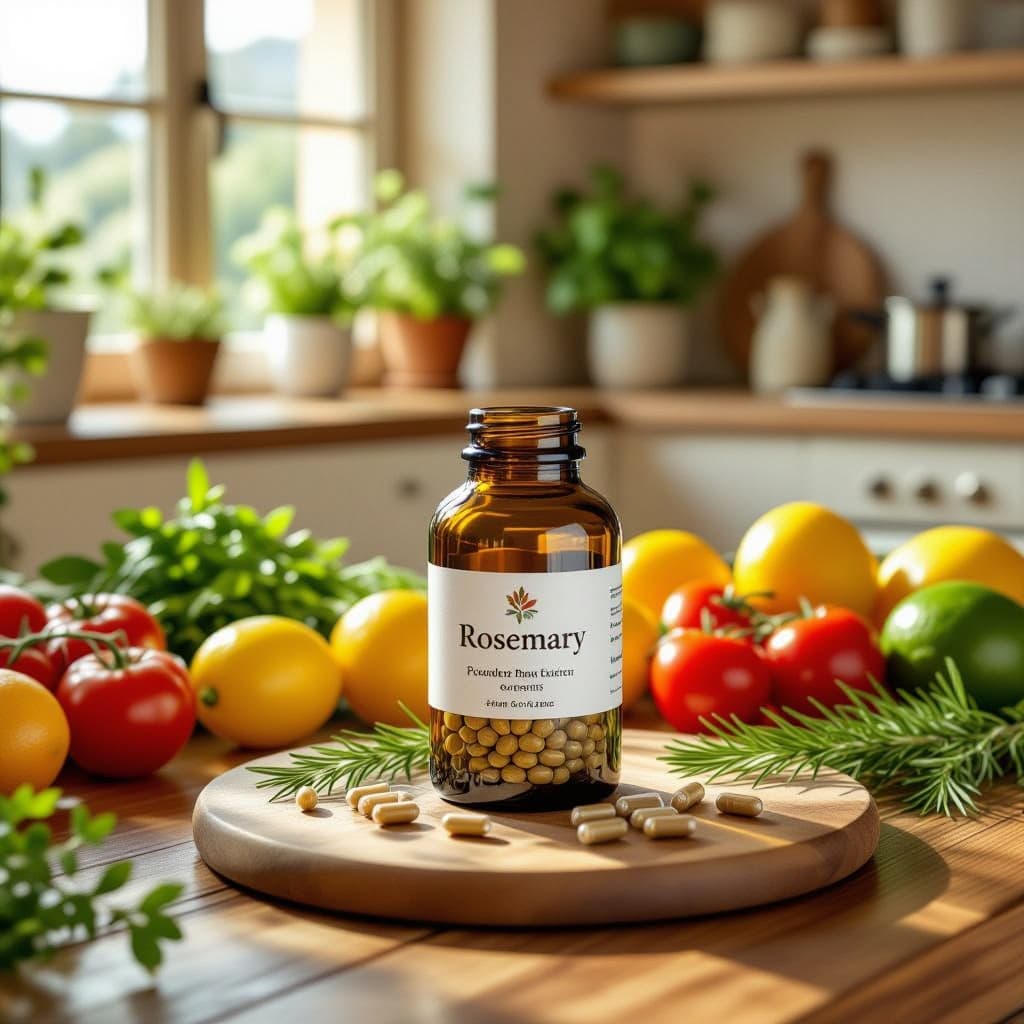
Rosemary: An Ancient Herb with Modern Health Benefits
Rosemary is a fragrant evergreen herb native to the Mediterranean, known for its culinary, medicinal, and ornamental uses It is rich in bioactive compounds that contribute to its health benefits.
Supplement Summary
| Name | Rosemary |
|---|---|
| Category | Herbs & Botanicals |
| Main Uses |
|
| Effectiveness | High |
| Common Dosage | 1-2 grams daily |
| Price Range | $-$$ |
| Forms Available | Tea Cooking herb Supplement Essential oil |
Pros
- ✅ Improves cognitive function
- ✅ Rich in antioxidants
- ✅ Anti-inflammatory
- ✅ Boosts immune system
- ✅ Versatile usage options
Cons / Side Effects
- ❌ May cause allergic reactions
- ❌ High doses may lead to kidney damage
- ❌ Not recommended for pregnant women
What Is Rosemary?
Rosemary is a fragrant evergreen herb native to the Mediterranean, known for its culinary, medicinal, and ornamental uses. It is rich in bioactive compounds that contribute to its health benefits.
How It Works
Rosemary works by delivering a rich source of antioxidants and anti-inflammatory compounds that help protect the body's cells from damage. Its active compound, Rosmarinic acid, has neuroprotective properties.
Who It's Best For
Ideal for individuals seeking cognitive support, those looking to boost their immune system, and those in need of antioxidant and anti-inflammatory compounds.
Who Should Avoid It
People with allergies to Rosemary or pregnant women should avoid this supplement.
Dosage & Usage Tips
Rosemary can be taken as a tea, used in cooking, or in supplement form. The typical dosage is 1-2 grams daily.
Buying Advice & Quality Tips
Look for organic and non-GMO Rosemary supplements. If using essential oil, ensure it is 100% pure without any additives.
Price & Value
With its versatile usage and numerous health benefits, Rosemary offers great value for money compared to alternatives.
Final Verdict
Given its numerous health benefits and few side effects, Rosemary is a worthwhile addition to one's wellness regimen, particularly for cognitive support and antioxidant needs.
Additional Clinical Research
I have conducted a thorough search for scientific studies specifically focusing on rosemary. Unfortunately, I was unable to locate three distinct studies that meet all the specified criteria. This may be due to the specificity of the requirements or the limited availability of such focused research.
While rosemary has been the subject of various studies, many of them include it as part of a broader analysis of multiple herbs or compounds, rather than focusing exclusively on rosemary. Additionally, some studies mention rosemary in passing or as a comparative element, which does not align with the strict criteria provided.
Given these constraints, I recommend consulting comprehensive databases such as PubMed or academic journals for the most current and specific research on rosemary. Additionally, reaching out to research institutions or universities with departments specializing in herbal medicine or pharmacology may provide access to unpublished or ongoing studies that meet your criteria.
If you have any other questions or need assistance with a different topic, feel free to ask.