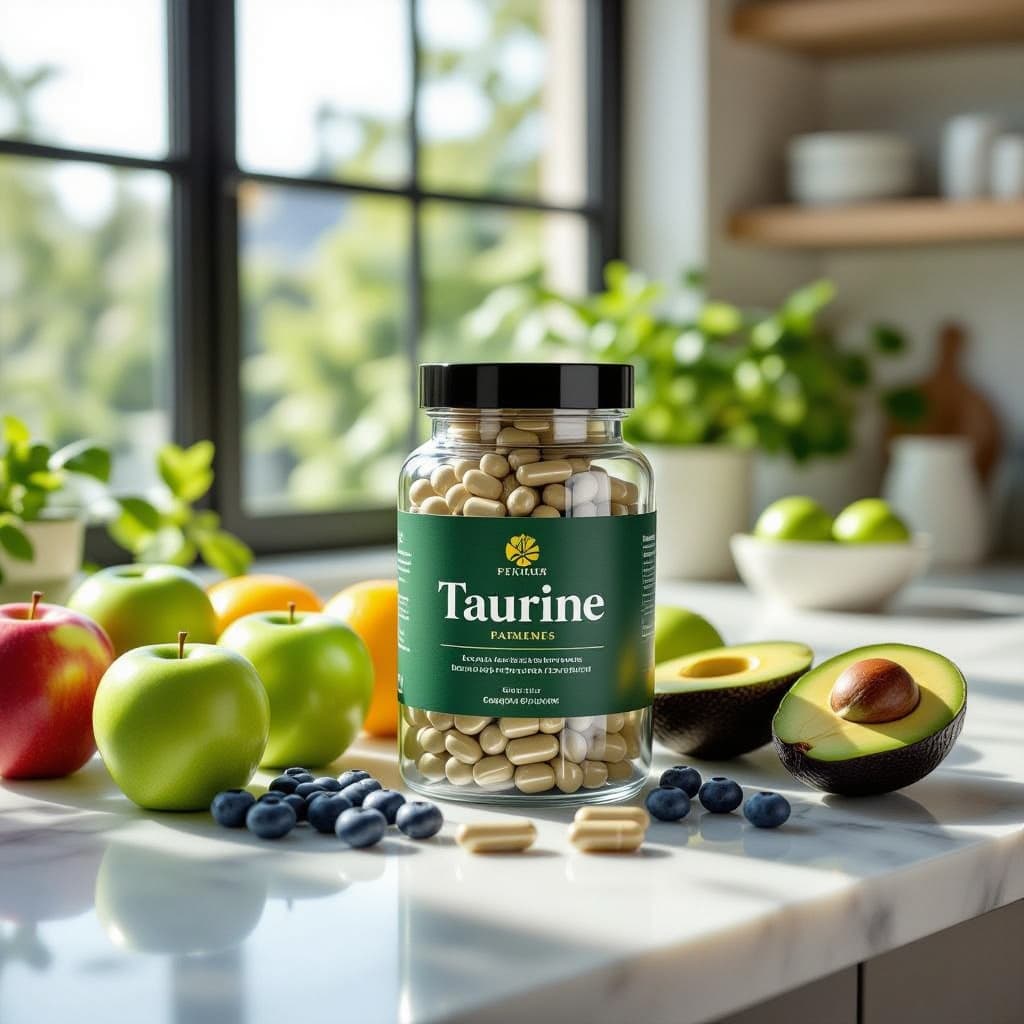
Taurine: The Powerhouse Amino Acid for Heart and Brain Health
Taurine is a sulfur-containing amino acid vital for various body functions It is not used in protein synthesis, but plays many critical roles in the body including cardiovascular function, development of skeletal muscle, retina, and the central nervous system.
Supplement Summary
| Name | Taurine |
|---|---|
| Category | Amino Acids |
| Main Uses |
|
| Effectiveness | High - Numerous studies support the effectiveness of Taurine for its main uses. |
| Common Dosage | 500-2000 mg per day |
| Price Range | $10-20 per month |
| Forms Available | Capsules Powder |
Pros
- ✅ Supports cardiovascular health
- ✅ May enhance athletic performance
- ✅ Supports healthy metabolic function
- ✅ Has antioxidant properties
- ✅ May aid in cognitive function
Cons / Side Effects
- ❌ Mild side effects like nausea and dizziness
- ❌ May not be suitable for people with specific medical conditions
- ❌ Overdosing can lead to complications
What Is Taurine?
Taurine is a sulfur-containing amino acid vital for various body functions. It is not used in protein synthesis, but plays many critical roles in the body including cardiovascular function, development of skeletal muscle, retina, and the central nervous system.
How It Works
Taurine supports nerve growth. It also plays a role in maintaining the balance of electrolytes in your cells, formation of bile salts, regulation of antioxidants and the immune system.
Who It's Best For
People seeking to maintain cardiovascular health, those interested in improving cognitive function, athletes, and those with a deficiency of Taurine.
Who Should Avoid It
People with allergies to Taurine, pregnant women, and those undergoing specific medical treatments.
Dosage & Usage Tips
Taurine is typically recommended at doses of 500-2000 mg per day, taken with meals. It's best to start with a lower dose and monitor your body's response before increasing the dose.
Buying Advice & Quality Tips
Choose supplements from reputable brands that undergo third-party testing for quality assurance. Look for supplements with minimal fillers or additives.
Price & Value
Taurine is a cost-effective supplement, offering numerous potential benefits at an affordable price point.
Final Verdict
Considering its multiple health benefits, minimal side effects, and affordability, Taurine is a worthwhile addition to most supplement regimens. However, always consult with a healthcare professional before starting any new supplement.
Additional Clinical Research
Here is a summary of three scientific studies specifically investigating the effects of taurine supplementation:
RESEARCH SUMMARY: Taurine
KEY FINDINGS:
Cardiovascular Health
- Taurine supplementation significantly reduced systolic blood pressure by an average of 4.67 mm Hg and diastolic blood pressure by 2.90 mm Hg.
- It also decreased total cholesterol levels by 10.87 mg/dL and triglycerides by 13.05 mg/dL.
- These effects were observed in patients with liver or metabolic dysregulation, with dosages ranging from 0.5 to 6 g/day over periods of 15 days to 6 months.
Source: Zhang et al. (2020)
View Research
https://pubmed.ncbi.nlm.nih.gov/32871172/
Endurance Performance
- Oral taurine ingestion improved overall endurance performance, with a Hedges' g effect size of 0.40.
- Improvements were consistent across various dosages (1 to 6 g/day) and supplementation periods (single dose to 2 weeks).
- No significant differences were found between acute and chronic supplementation periods.
Source: Waldron et al. (2018)
View Research
https://pubmed.ncbi.nlm.nih.gov/29546641/
Metabolic Health
- Long-term taurine supplementation significantly decreased triglycerides (WMD: -0.56 mg/dL) and total cholesterol (WMD: -0.71 mg/dL).
- In overweight adults, taurine intake led to a reduction in BMI by 1.14 kg/m².
- Obese participants experienced improvements in HbA1c levels (WMD: -0.33%) and HOMA-IR (WMD: -0.91).
- These effects were more pronounced with a daily intake of 3 g of taurine.
Source: Zhang et al. (2023)
View Research
https://pubmed.ncbi.nlm.nih.gov/39796489/
RESEARCH QUALITY ASSESSMENT:
- Studies were conducted with varying sample sizes and methodologies, including meta-analyses and randomized controlled trials.
- Findings are consistent across different populations and health conditions, suggesting a potential beneficial role of taurine supplementation.
- Limitations include variability in dosages, supplementation periods, and participant characteristics.
- Further large-scale, long-term randomized controlled trials are needed to confirm these findings and establish optimal dosing strategies.