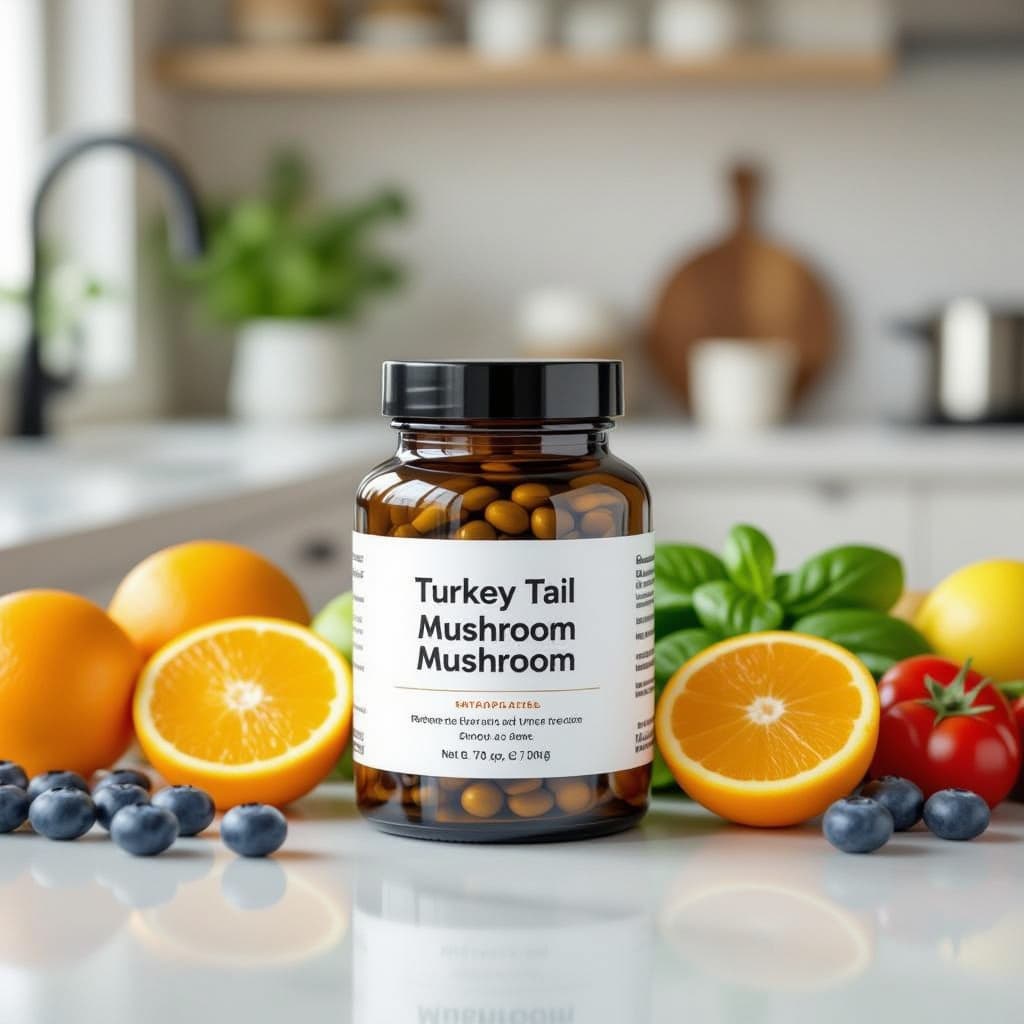
Turkey Tail Mushroom: A Natural Powerhouse for Immune Support
Turkey Tail Mushroom (Trametes versicolor) is a medicinal mushroom that has been used in traditional medicine for centuries Known for its distinct fan shape and colorful pattern, it derives its name from its resemblance to a turkey's tail.
Supplement Summary
| Name | Turkey Tail Mushroom |
|---|---|
| Category | Immune Support |
| Main Uses |
|
| Effectiveness | High, especially for immune support. Further research is needed for anti-cancer properties. |
| Common Dosage | 1-3 grams daily |
| Price Range | $-$ |
| Forms Available | Capsules Powder |
Pros
- ✅ Boosts immune system
- ✅ Supports gut health
- ✅ Potential anti-cancer properties
- ✅ Natural and side-effect free
- ✅ Affordable and widely available
Cons / Side Effects
- ❌ Potential digestive upset
- ❌ May cause darkening of the nails
- ❌ Risk of allergic reactions
What Is Turkey Tail Mushroom?
Turkey Tail Mushroom (Trametes versicolor) is a medicinal mushroom that has been used in traditional medicine for centuries. Known for its distinct fan shape and colorful pattern, it derives its name from its resemblance to a turkey's tail. It's rich in antioxidants and polysaccharides, which are known to boost immunity and gut health.
How It Works
The active compounds in Turkey Tail Mushroom, particularly polysaccharopeptides, have potent immune-boosting properties. They stimulate the activity of immune cells and modulate the immune response. Additionally, these compounds exert prebiotic effects, nourishing beneficial gut bacteria and promoting gut health.
Who It's Best For
Ideal for individuals looking to naturally boost their immune system, especially those with weakened immunity. It's also beneficial for individuals seeking to improve their gut health.
Who Should Avoid It
People with mushroom allergies should avoid this supplement. Also, those with auto-immune diseases should consult their healthcare provider before use as it may stimulate immune response.
Dosage & Usage Tips
The typical recommended dosage is 1-3 grams daily, which can be taken with or without food. It's best to start with a lower dose and gradually increase as tolerated.
Buying Advice & Quality Tips
Look for products that list the amount of polysaccharopeptides on the label, as this indicates potency. Organic and sustainably harvested products are best.
Price & Value
The cost of Turkey Tail Mushroom supplements is generally low compared to many other immune-supporting supplements, making it a cost-effective choice for immune health.
Final Verdict
Turkey Tail Mushroom is a potent immune-booster with added benefits for gut health. Though more research is needed, particularly on its anti-cancer properties, it's a worthy addition to a health-conscious diet.
Additional Clinical Research
Here are three scientific studies specifically focused on Turkey Tail Mushroom (Trametes versicolor):
RESEARCH SUMMARY: Turkey Tail Mushroom
KEY FINDINGS:
Immune Modulation
- Turkey Tail Mushroom mycelium and its fermented substrate exhibit potent and complementary immune-activating properties in vitro.
- The study involved in vitro analysis of human peripheral blood mononuclear cells exposed to aqueous and solid fractions of Turkey Tail mycelium and its fermented substrate.
Source: Benson et al. (2019)
View Research
https://bmccomplementmedtherapies.biomedcentral.com/articles/10.1186/s12906-019-2681-7
Antioxidant Activity
- Crude exopolysaccharides from Turkey Tail Mushroom demonstrate significant antioxidant activities, including DPPH free radical scavenging and metal chelating abilities.
- The study assessed the antioxidant properties of crude exopolysaccharides extracted from Turkey Tail Mushroom.
Source: Kıvrak et al. (2020)
View Research
https://pubmed.ncbi.nlm.nih.gov/33389854/
Safety Evaluation
- A 28-day oral administration of extracellular polysaccharopeptides from Turkey Tail Mushroom showed no adverse effects in mice, supporting its potential as a dietary supplement.
- The study involved administering varying doses of extracellular polysaccharopeptides to male and female ICR mice over 28 days, monitoring for toxicity and adverse effects.
Source: Hsieh et al. (2011)
View Research
https://pubmed.ncbi.nlm.nih.gov/22135874/
RESEARCH QUALITY ASSESSMENT:
- The studies are published in peer-reviewed journals, indicating a level of scientific rigor.
- Sample sizes vary, with in vitro studies lacking human participants and the animal study involving a limited number of mice, which may affect the generalizability of the findings.
- The in vitro nature of some studies means results may not directly translate to human health outcomes.
- Further research, particularly large-scale human clinical trials, is needed to confirm these findings and establish practical applications.