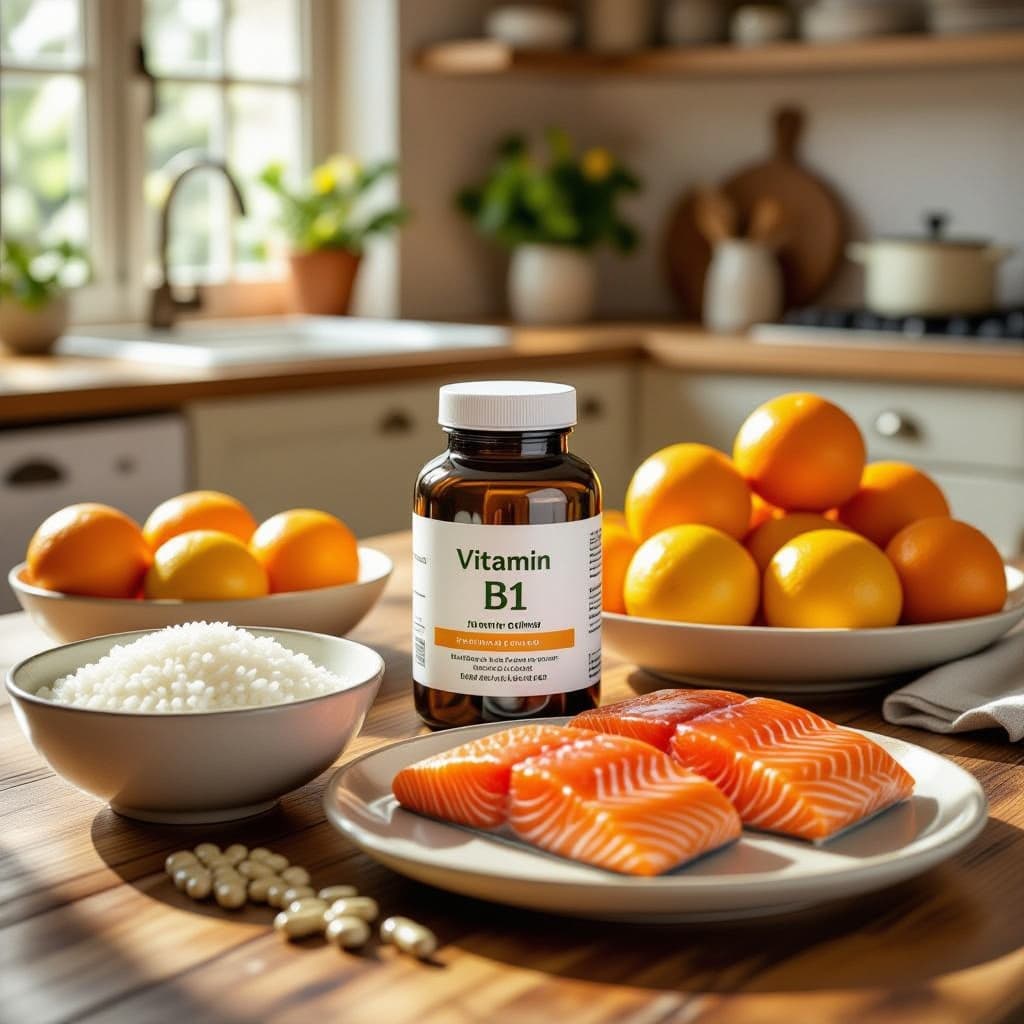
A Comprehensive Review of Vitamin B1: An Essential Nutrient for Energy and Brain Health
Vitamin B1, also known as Thiamine, is an essential nutrient that our bodies cannot produce on their own It plays a key role in energy metabolism and in the function of cells, particularly nerve cells.
Supplement Summary
| Name | Vitamin B1 |
|---|---|
| Category | Vitamins & Minerals |
| Main Uses |
|
| Effectiveness | High - Numerous studies support the benefits of Vitamin B1 for cognitive and cardiovascular health, as well as energy production. |
| Common Dosage | 1.1-1.2 mg daily |
| Price Range | $-$ |
| Forms Available | Tablets Capsules Liquid |
Pros
- ✅ Supports energy production
- ✅ Promotes healthy brain function
- ✅ Improves heart health
- ✅ Aids nerve function
- ✅ Helps with digestion
Cons / Side Effects
- ❌ High doses can cause side effects like headache and nausea
- ❌ It's a water-soluble vitamin, so it's not stored in the body and must be consumed regularly
- ❌ Not everyone can absorb B1 effectively
What Is Vitamin B1?
Vitamin B1, also known as Thiamine, is an essential nutrient that our bodies cannot produce on their own. It plays a key role in energy metabolism and in the function of cells, particularly nerve cells. It's found in foods like whole grains, meat, and fish.
How It Works
Vitamin B1 helps convert food into energy. It's also essential for the growth, development, and function of the cells in your body. Furthermore, it supports nerve function, brain health, and cardiovascular function.
Who It's Best For
Vitamin B1 is ideal for individuals looking to support their cognitive function, cardiovascular health, energy levels, and nerve function.
Who Should Avoid It
People with hypersensitivity or allergy to thiamine or any component of thiamine formulations should avoid this supplement.
Dosage & Usage Tips
The recommended dosage for adults is 1.1-1.2 mg daily, taken once a day with a meal. It's always best to consult with a healthcare professional before starting any new supplement regimen.
Buying Advice & Quality Tips
When purchasing Vitamin B1 supplements, look for products that are third-party tested for quality and purity. It's also recommended to choose supplements that are free from artificial additives and allergens.
Price & Value
The cost of Vitamin B1 supplements is fairly low, making them a cost-effective investment in your health, particularly considering their wide range of benefits.
Final Verdict
Considering the key role Vitamin B1 plays in important bodily functions and the wide range of its benefits, it is a worthwhile supplement for most people, especially those looking to support their cognitive and cardiovascular health.
Additional Clinical Research
Here are three published scientific studies specifically investigating the effects of Vitamin B1 (thiamine):
RESEARCH SUMMARY: Vitamin B1
KEY FINDINGS:
Vitamin B1 and Major Depressive Disorder
- Adjuvant thiamine improved symptoms of depression in patients with major depressive disorder (MDD) when combined with standard SSRI treatment.
- 51 inpatients with MDD participated; thiamine supplementation led to faster alleviation of depressive symptoms within 6 weeks compared to placebo.
Source: Hajhashemi et al. (2016)
View Research
https://pubmed.ncbi.nlm.nih.gov/26984349/
Vitamin B1 and Chronic Fatigue in Inflammatory Bowel Disease
- High-dose oral thiamine significantly reduced chronic fatigue in patients with quiescent inflammatory bowel disease (IBD).
- 40 patients were enrolled; thiamine supplementation resulted in a mean reduction of 4.5 points in fatigue scores compared to placebo.
Source: Sechi et al. (2021)
View Research
https://pubmed.ncbi.nlm.nih.gov/33210299/
Vitamin B1 and Cognitive Function in Older Adults
- Increased dietary intake of vitamin B1 was associated with better cognitive function in individuals aged over 60.
- 2422 participants were analyzed; higher vitamin B1 intake correlated with improved scores in cognitive tests such as the Digit Symbol Substitution Test and Animal Fluency Test.
Source: Zhang et al. (2024)
View Research
https://pubmed.ncbi.nlm.nih.gov/38365743/
RESEARCH QUALITY ASSESSMENT:
- All studies were randomized controlled trials or cross-sectional studies published in reputable journals.
- Sample sizes varied, with the largest study including over 2400 participants, enhancing the reliability of findings.
- Limitations include potential biases inherent in self-reported dietary intake and the need for longer follow-up periods to assess long-term effects.
- Further research is warranted to confirm these findings across diverse populations and to explore the mechanisms underlying the observed benefits of Vitamin B1.