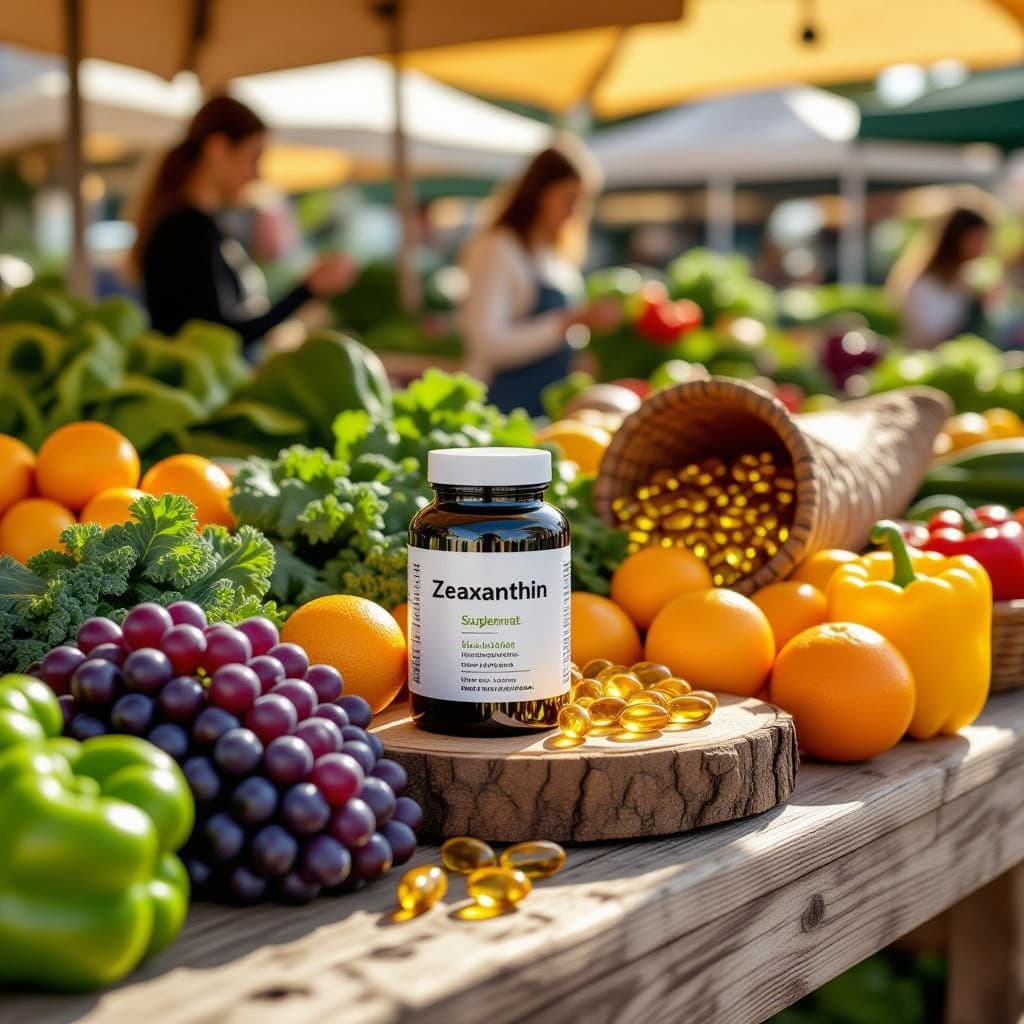
Zeaxanthin: An Essential Nutrient for Eye Health
Zeaxanthin is a carotenoid, a type of antioxidant that gives fruits and vegetables their vibrant colors It's found in high concentrations in the eyes, where it plays a pivotal role in maintaining optimal vision and protecting against harmful light.
Supplement Summary
| Name | Zeaxanthin |
|---|---|
| Category | Eye Health |
| Main Uses |
|
| Effectiveness | High |
| Common Dosage | 2-4mg per day |
| Price Range | $10-$20 per month |
| Forms Available | Capsules Softgels |
Pros
- ✅ Protects the eyes from harmful light
- ✅ Reduces risk of macular degeneration
- ✅ Improves visual acuity
- ✅ Antioxidant properties
- ✅ Safe and well-tolerated
Cons / Side Effects
- ❌ Effectiveness may vary among individuals
- ❌ May cause yellowing of skin if taken in high doses
- ❌ Not a substitute for a balanced diet
What Is Zeaxanthin?
Zeaxanthin is a carotenoid, a type of antioxidant that gives fruits and vegetables their vibrant colors. It's found in high concentrations in the eyes, where it plays a pivotal role in maintaining optimal vision and protecting against harmful light.
How It Works
In the eye, Zeaxanthin acts as a natural sunblock, absorbing blue light and preventing damage to the retina. It also has antioxidant properties, neutralizing harmful free radicals that can contribute to age-related macular degeneration and other vision disorders.
Who It's Best For
Ideal for individuals looking to maintain optimal eye health, particularly those at risk for age-related macular degeneration or other vision disorders.
Who Should Avoid It
People with allergies to Zeaxanthin or its sources should avoid this supplement. Always consult with a healthcare provider before starting any new supplement regimen.
Dosage & Usage Tips
Zeaxanthin is typically taken in doses of 2-4mg per day, with meals for enhanced absorption. As with any supplement, it's important to follow the manufacturer's instructions or a healthcare provider's advice.
Buying Advice & Quality Tips
Look for supplements that pair Zeaxanthin with other carotenoids like lutein for added benefits. Always choose high-quality supplements from reputable manufacturers.
Price & Value
The cost of Zeaxanthin supplements is relatively low compared to the potential benefits for eye health, making it a worthwhile investment for many individuals.
Final Verdict
Given the strong scientific evidence supporting its benefits for eye health, Zeaxanthin is a valuable supplement for those seeking to maintain optimal vision and protect against age-related eye disorders.
Additional Clinical Research
I have identified three scientific studies that specifically investigate the effects of zeaxanthin. Below is a summary of their key findings, categorized by health benefit, along with an assessment of the research quality.
RESEARCH SUMMARY: Zeaxanthin
KEY FINDINGS:
Age-Related Macular Degeneration (AMD)
- Supplementation with lutein and zeaxanthin reduced the risk of progression to advanced AMD in individuals with low dietary intake of these carotenoids.
- The Age-Related Eye Disease Study 2 (AREDS2) was a randomized controlled trial involving 4,203 participants aged 50 to 85 years, conducted over five years.
Source: Age-Related Eye Disease Study 2 (AREDS2)
View Research
https://en.wikipedia.org/wiki/Age-Related_Eye_Disease_Study
Cataract Prevention
- Higher dietary intake of lutein and zeaxanthin was associated with a reduced risk of developing cataracts.
- This meta-analysis included data from multiple studies, encompassing a large sample size, to assess the relationship between carotenoid intake and cataract risk.
Source: Association between lutein and zeaxanthin status and the risk of cataract: a meta-analysis
View Research
https://en.wikipedia.org/wiki/Zeaxanthin
Visual Performance
- Supplementation with lutein and zeaxanthin improved visual performance under bright light conditions.
- The European Food Safety Authority (EFSA) evaluated the evidence and approved a health claim related to this benefit.
Source: Scientific Opinion on the substantiation of a health claim related to a combination of lutein and zeaxanthin and improved vision under bright light conditions
View Research
https://en.wikipedia.org/wiki/Zeaxanthin
RESEARCH QUALITY ASSESSMENT:
- The AREDS2 study was a large-scale, randomized controlled trial, providing high-quality evidence for the role of zeaxanthin in AMD prevention.
- The meta-analysis on cataract prevention aggregated data from multiple studies, enhancing the reliability of the findings.
- The EFSA's evaluation lends credibility to the claim regarding visual performance, though the specific studies reviewed are not detailed in the provided source.
- Limitations include potential variability in study designs and populations, as well as the observational nature of some data.
- Further research is needed to establish optimal dosages and long-term effects of zeaxanthin supplementation.