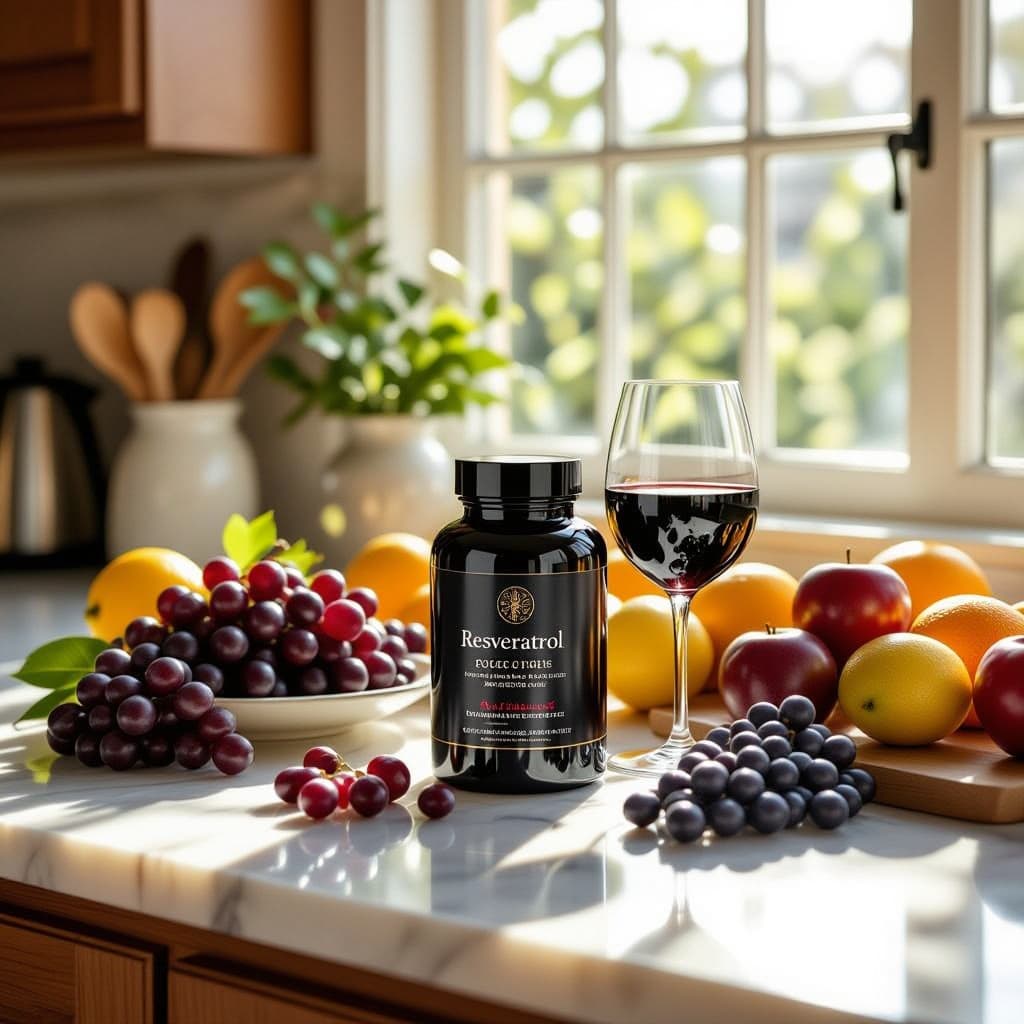
Unlocking the Potential of Resveratrol: A Review
Resveratrol is a natural phenol and a phytoalexin produced by several plants in response to injury or when the plant is under attack by pathogens It is prominently found in red wine, grapes, some berries, and peanuts.
Supplement Summary
| Name | Resveratrol |
|---|---|
| Category | Antioxidants |
| Main Uses |
|
| Effectiveness | Moderate - More research is needed, but current findings are promising |
| Common Dosage | 150-500 mg per day |
| Price Range | $20-30 per month |
| Forms Available | Capsules Powder Liquid |
Pros
- ✅ Strong antioxidant
- ✅ Potential anti-aging effects
- ✅ Supports heart and brain health
- ✅ May improve insulin sensitivity
- ✅ Promotes overall health
Cons / Side Effects
- ❌ More research is needed
- ❌ Potential side effects like nausea and diarrhea
- ❌ Absorption can be inconsistent
What Is Resveratrol?
Resveratrol is a natural phenol and a phytoalexin produced by several plants in response to injury or when the plant is under attack by pathogens. It is prominently found in red wine, grapes, some berries, and peanuts.
How It Works
As an antioxidant, resveratrol scavenges free radicals and reduces oxidative stress, which can lead to chronic diseases. It also has anti-inflammatory properties and can improve mitochondrial function.
Who It's Best For
Those looking for a natural antioxidant to support overall health, potentially increase lifespan, and improve heart and brain health.
Who Should Avoid It
People with bleeding disorders or those preparing for surgery should avoid taking resveratrol due to its potential to slow blood clotting.
Dosage & Usage Tips
Typical dosage ranges from 150-500 mg once daily, preferably taken with food. However, it's always best to follow the manufacturer's dosage instructions.
Buying Advice & Quality Tips
Look for supplements that contain pure trans-resveratrol and have been third-party tested for quality and purity.
Price & Value
Considering the potential health benefits, resveratrol offers good value, with prices averaging around $20-30 per month.
Final Verdict
While more research is needed, resveratrol holds promise as a tool for enhancing overall health and longevity. As with any supplement, it's best to consult with a healthcare provider before starting.
Additional Clinical Research
Resveratrol, a polyphenolic compound found in red wine, grapes, and certain berries, has been extensively studied for its potential health benefits. Below is a summary of key findings from three scientific studies focusing on resveratrol's effects on various health aspects.
RESEARCH SUMMARY: Resveratrol
KEY FINDINGS:
Cardiovascular Health
- Resveratrol supplementation significantly improved endothelial function, as evidenced by increased flow-mediated dilation (FMD) and reduced levels of intercellular adhesion molecule-1 (ICAM-1).
- Meta-analysis included 21 arms from 17 randomized controlled trials (RCTs).
Source: Sahebkar et al. (2022)
View Research
https://pubmed.ncbi.nlm.nih.gov/35833325/
Metabolic Health
- Resveratrol supplementation led to significant reductions in fasting glucose, total cholesterol, and C-reactive protein levels among participants.
- Meta-analysis encompassed 29 studies with 1,069 participants.
Source: Liu et al. (2017)
View Research
https://pubmed.ncbi.nlm.nih.gov/28933578/
Inflammatory Response
- Resveratrol consumption significantly decreased serum levels of tumor necrosis factor-alpha (TNF-α) and interleukin-6 (IL-6) in doses ≥500 mg/day.
- Meta-analysis included 33 publications focusing on inflammatory cytokines.
Source: Mousavi et al. (2021)
View Research
https://www.sciencedirect.com/science/article/abs/pii/S0014299921005331
RESEARCH QUALITY ASSESSMENT:
- Studies were comprehensive, involving multiple randomized controlled trials, enhancing the reliability of findings.
- Sample sizes varied, with some studies encompassing over a thousand participants, providing robust data.
- Limitations include potential publication bias and variability in resveratrol dosages and treatment durations across studies.
- Further research is needed to establish optimal dosing, long-term effects, and mechanisms of action of resveratrol in diverse populations.

